Trip to Pompeii and Herculaneum in Italy
General
A fascinating journey through the pages of history awaits you in Pompeii and its (less famous) neighbor Herculaneum, ancient Roman cities famous for their preservation after the eruption of Mount Vesuvius in 79 AD.
The eruption destroyed several cities in the Bay of Naples, among them, as mentioned, Pompeii and Herculaneum. The inhabitants of the cities were taken by surprise by the eruption and were unprepared for it. Although the eruption was preceded by an earthquake and smaller tremors, most residents still chose to remain in their homes.
An excellent starting point for a trip to Pompeii and Herculaneum is Sorrento, where it is recommended to stay and from which you can also embark on star tours to Naples, Capri, Mount Vesuvius, and the Amalfi Coast.
Booking Tours to Pompeii and Herculaneum from Viator:
Tours tailored for cruise ship passengers - including pickup and return to port:
Recommended Lodging in Sorrento:
Grand Hotel Excelsior Vittoria - An impressive and luxurious 5-star hotel with 91 rooms, perched on a cliff overlooking the Bay of Naples and comprising 3 historic buildings set within a private Mediterranean park. The harbor can be reached via an elevator. The hotel, immersed in charming Mediterranean gardens, features private parking and several quality restaurants.
Grand Hotel Ambasciatori - A 4-star hotel offering 103 rooms. The hotel is situated on a cliff and overlooks the Bay of Naples from its rooftop terrace. It features a private beach and a garden with a swimming pool.
Comfort Hotel Gardenia Sorrento Coast - A small 3-star hotel with 27 rooms, located just 600 meters from the historic center of Sorrento. The hotel includes a swimming pool and a rooftop terrace with views of the Bay of Naples. All rooms feature a private balcony. The hotel was completely renovated in 2007 and is classified as an Ecoworldhotel thanks to its eco-friendly policies.
B&B Al Centro - Four air-conditioned apartments with a fully equipped kitchenette and balconies overlooking the sea. The apartments accommodate 2-4 guests. Located 150 meters from Piazza Tasso.
Another charming town to stay in is: Vico Equense:
A small and lovely boutique hotel, with wonderful service, a central location, and excellent breakfasts, warmly recommended is:
Villa Scaramellino Relais - The hotel features modern rooms with balconies, air conditioning, free parking, free Wi-Fi, and a washing machine and dryer for guest use. The property offers double rooms and apartments with a bedroom and living room suitable for four guests.
Search for Hotels on Booking.com in the Sorrento Area Map:
Booking.com
Trip to Pompeii
As a result of the eruption, the manner of Pompeii's destruction, and its abrupt abandonment, most of its buildings and ruins were preserved.

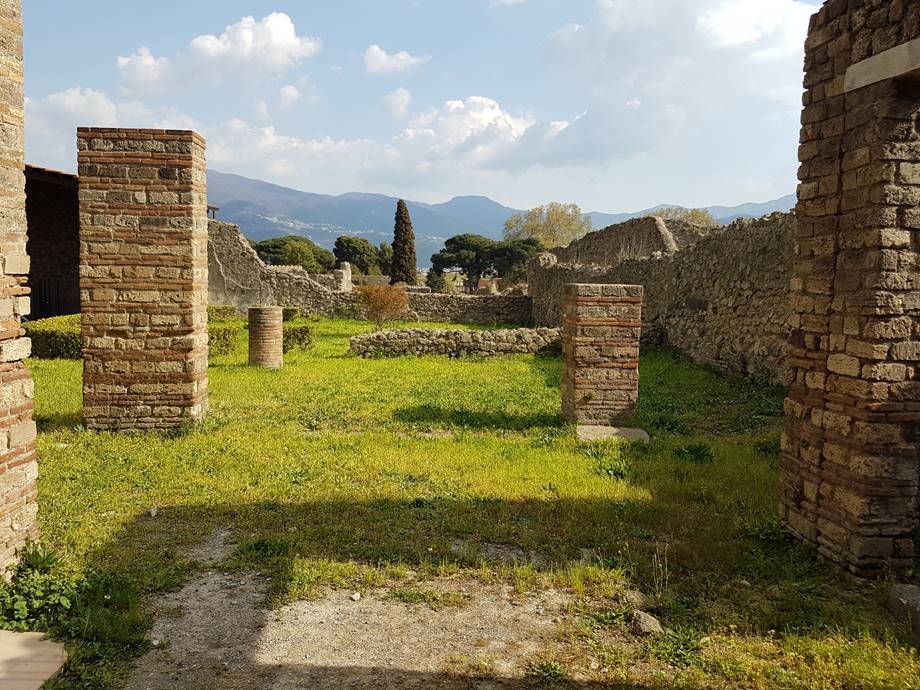
The ash clouds and dust waves that covered the entire bay area preserved the structures, and some of them remain standing to this day. Visitors to Pompeii, even today, get the feeling that this is an ancient city where time has stood still.
Between Pompeii and its neighbor Herculaneum, Pompeii is much larger and served as a more important center for the inhabitants. The city was buried under a layer of ash and volcanic material four meters deep and was discovered in 1748 by a farmer digging in his field who came across the ancient ruins. From excavations over the years, researchers estimate that it was a city inhabited by wealthy residents. Among the streets were found residential homes, public buildings, workshops, shops, baths, theaters, and even a brothel.

Pompeii was indeed a large city (440,000 square meters), so it is worth dedicating at least 4 hours to explore it thoroughly. History and archaeology enthusiasts can spend up to two days here, but the average traveler can be satisfied with a few hours. It is recommended to visit the site with a guide (many guides stand at the entrance gate to the ruins, Porta Marina) who will enrich the tour and share fascinating details about the city and its residents. Alternatively, you can tour independently and focus on the must-see sites in the city, especially the 25 public buildings scattered throughout: the amphitheater, the prominent villas, the baths, the brothels, and of course the Forum.

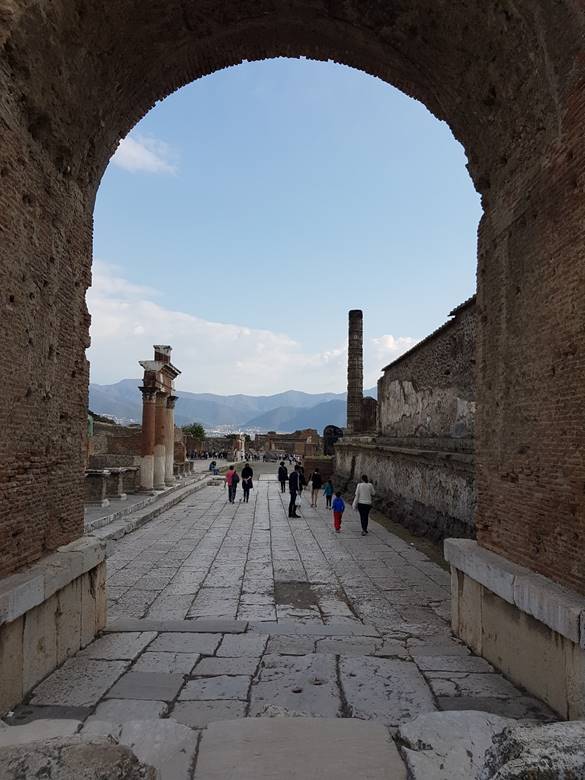
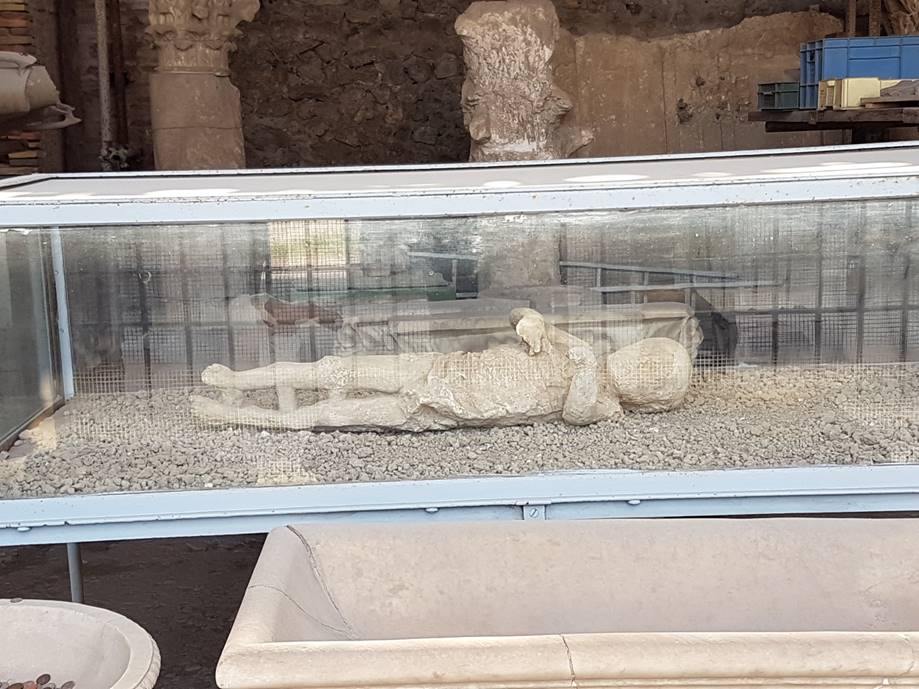
As in every Roman city, the Forum was the beating heart of the city and the center of administration. Government and religious institutions were concentrated here, alongside shops, public buildings, and warehouses. It is fascinating to wander through the warehouses beside the Forum, where remarkably you will find several casts of the city's inhabitants. This is a collection of plaster casts created by filling the empty voids found inside the hardened lava. Italian archaeologist Fiorelli used a liquid plaster mixture to fill the voids left behind in the ash and pumice. After the plaster cooled and solidified, the resulting casts revealed the posture of the victims at the precise moment the ash cloud enveloped them, freezing them in time and leading to their deaths. The plaster casts uncovered single individuals, families, and animals.
Trip to Herculaneum
Pompeii's neighbor, Herculaneum, is located 15 km north of it. Unlike Pompeii, Herculaneum is a smaller city, and most of it has not yet been excavated or opened to the public. Surrounding the ruins site are old (mostly modest) houses. It is astonishing to contemplate what lies beneath these buildings. Could the Forum be beneath the feet of current residents? Are there more impressive ancient villas waiting to be found? Are more inhabitants buried, frozen under the surge of volcanic matter?

Herculaneum is indeed smaller than Pompeii (the total area of Herculaneum is about 200 dunams, of which only about 50 are open to the public), but it was better preserved thanks to a thick layer of volcanic mud and pyroclastic material that engulfed it after the eruption. The entire site of Herculaneum can be seen in a two-hour visit, and here too, joining a guide is highly recommended.
Herculaneum was a peaceful resort town situated right on the seashore, much like modern-day Sorrento. Rome's wealthy gathered in Herculaneum, staying in opulent seaside villas. The city is divided into four quarters where you will find bathhouses, theaters, shops (even two-story buildings), residential homes, and dining spots.
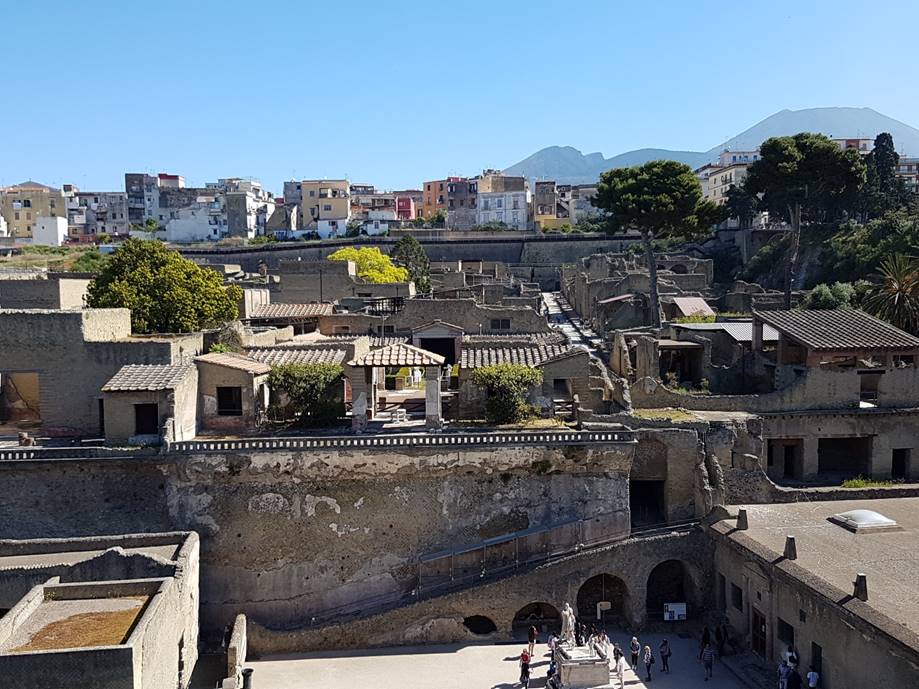
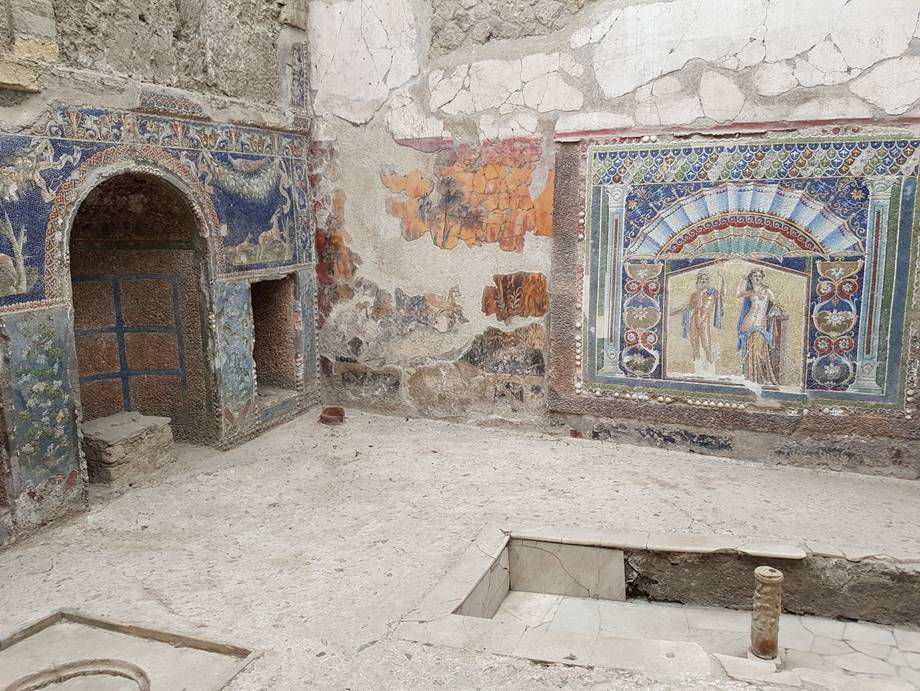
The city of Herculaneum was named after Hercules, who according to mythology was its founder. The early inhabitants of the city were Greek and revered Hercules as a god.
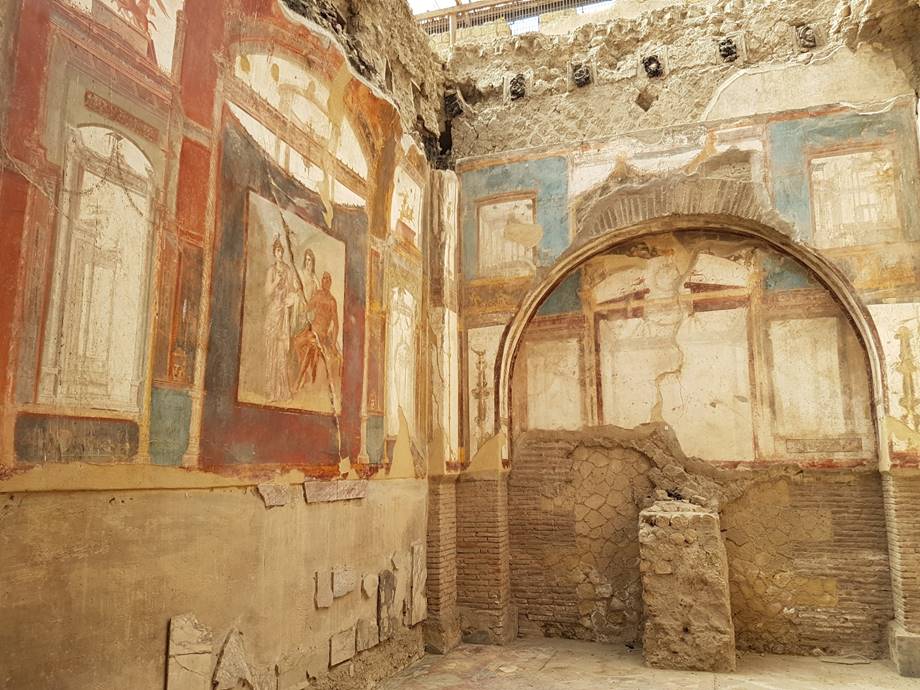
After visiting the ruins of Herculaneum, it is also recommended to visit the nearby virtual museum, Museo Archeologico Virtuale. The museum screens a 3D film about the eruption of Mount Vesuvius and the days preceding it. Additionally, the museum features interactive virtual exhibits depicting daily life in Pompeii, Herculaneum, and other surrounding towns.
A trip to Pompeii and Herculaneum is a moving encounter with the pages of history. We all learned about the eras of Greece and Rome in school, but seeing the ruins and well-preserved luxury villas with your own eyes is truly a unique experience.
Written by: O. E. Bar