A Trip to Évora in Portugal
Introduction
Évora, considered one of the most beautiful cities in Portugal, is an ancient city in the Alentejo region and is located about an hour and a half (140 km) drive east of Lisbon.
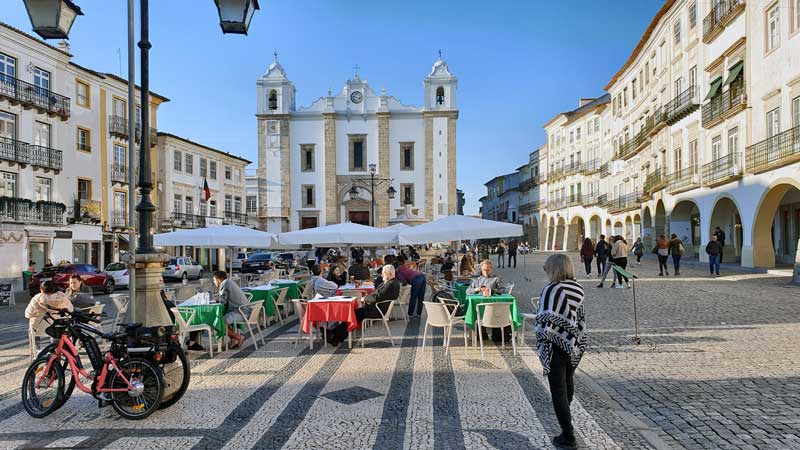
The historic center of Évora was declared a UNESCO World Heritage Site. In the historic center, 4,000 historic buildings are well-preserved, including the city wall and its gates, squares, palaces, churches, fortresses, and even an ancient Jewish Quarter. Évora is described by UNESCO as a "museum city" thanks to the abundance of ancient buildings preserved from various periods—starting from the Roman era, through the Moorish period, and up to the era of Catholic monarchs and the Inquisition.
In the Middle Ages, the city served as the residence for several kings of Portugal and is home to the Archbishop of Évora.
Since June 1994, Évora has been a member of the Most Ancient European Towns Network.
Évora is located on a hill within a valley surrounded by low hills, in the middle of the wide Alentejo plain.
The Alentejo region is primarily agricultural, abundant in vineyards, olive groves, and cork oaks.
Cork and cork products for sale in shops:
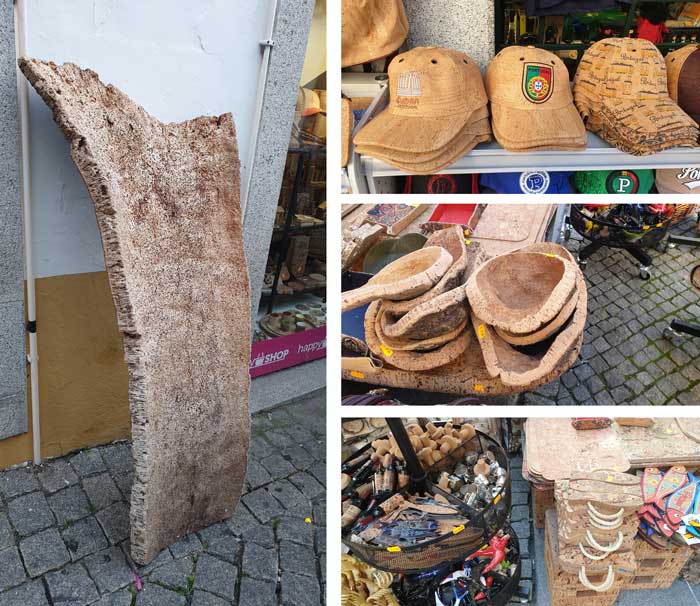
Évora is also a center for the food industry: processing grains and olives, and producing wine. It is also famous for the cheese named after it—Évora cheese. It has a well-developed cork processing industry, which is used to make countless products such as shoes, jewelry, kitchenware, aprons, and even cork umbrellas. Cork bags of all styles and sizes are especially popular.
The city features narrow alleys packed with restaurants, cafes, and especially a wide array of shops, many of which sell a variety of cork items alongside pottery and souvenirs. The city's houses are painted white and decorated with tiles. The Jewish Quarter in Évora was situated within the medieval city walls, and its remains can still be seen today.
Guided Tour to Évora Departing from Lisbon
Usually, a single day is sufficient to dedicate to Évora and its surroundings, so many visit on a half-day or full-day tour from Lisbon.
For those without a car, and particularly for those interested in fascinating explanations about the city, its rich past, and its culture, joining a guided day trip from Lisbon is highly recommended.
♦ Recommended Private Tour: Tour Evora and Alentejo with private guide
♦ Full day Tour:
From Lisbon to Alentejo: Évora and Megaliths Full-Day Tour
Lisbon Accommodation Recommendations can be found in my travel guide to Lisbon.
Recommended Hotels in Évora
For those arriving in Évora by car who are not planning to return to Lisbon, there are plenty of lodging options within Évora itself, including unique historic buildings such as castles and monasteries that have been converted into luxury hotels filled with character and ambiance:
Convento do Espinheiro, Historic Hotel & Spa
A luxurious and pampering 5-star hotel located 4 km from the city center, housed in an ancient 15th-century convent. The hotel is surrounded by expansive gardens. It features 3 swimming pools, a health and spa center, two restaurants, and offers various activities for its guests. Free Wi-Fi and parking.
A 5-star hotel located in the heart of the old town between Évora's Gothic Cathedral and the Temple of Diana. The hotel is housed in a beautifully renovated and preserved convent. It features a swimming pool with a sun terrace, a quality restaurant, and a bar. Free Wi-Fi and parking.
A 4-star hotel located within Évora's historic city walls, housed in a 16th-century olive oil mill. Most of the city's attractions are within a 5-minute walk. The hotel features a garden terrace and a bar. Free Wi-Fi and parking.
Main Tourist Attractions in the City of Évora
Chapel of Bones (Capela dos Ossos)
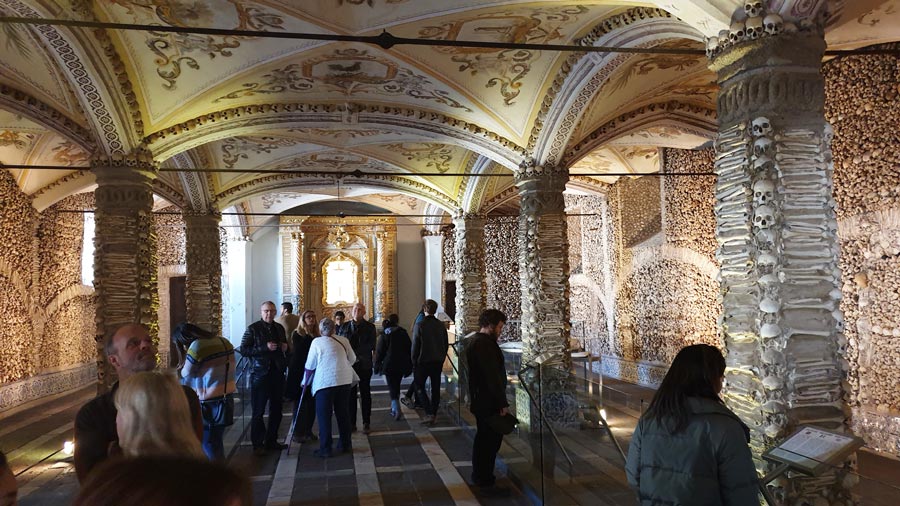
This is without doubt the most fascinating site in the city, despite being quite bizarre. The chapel walls are densely lined with the bones of around 8,000 monks, including, of course, their skulls.
The Chapel of Bones was built in the 16th century AD by a group that opposed religious reforms and wanted to emphasize how brief and fragile life can be.
At the entrance to the chapel hangs a sign stating: "We bones that are here await yours."
Human bones lining the chapel's walls and pillars:

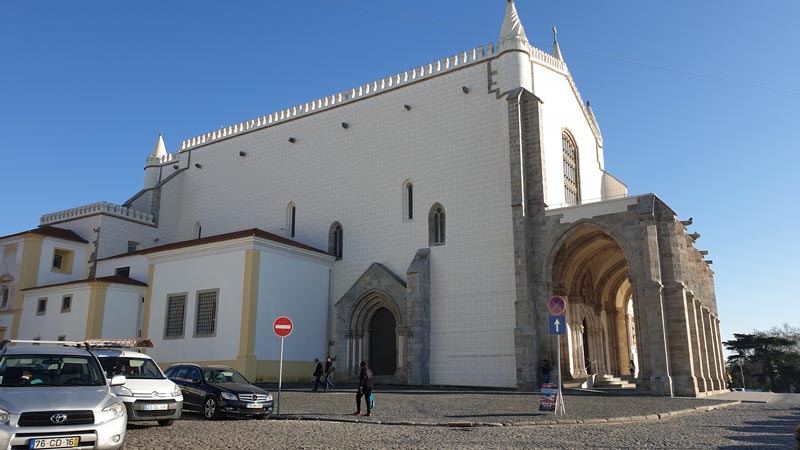
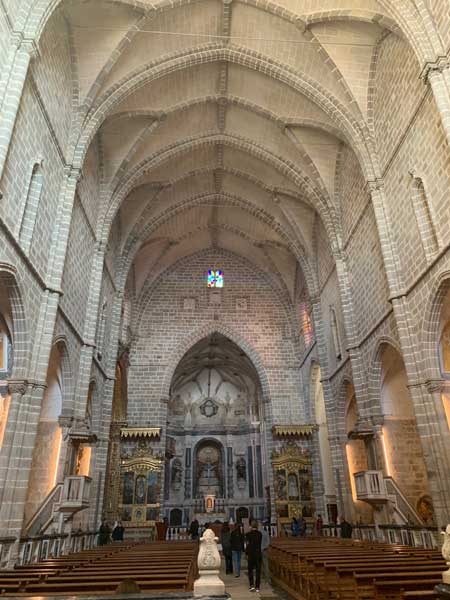
The Chapel of Bones is connected to the Church of Saint Francis (Igreja de São Francisco), an impressive church built during the height of the Portuguese Age of Discovery.
The Roman Temple: Temple of Diana (Templo Diana)
A 1st-century Roman temple built in honor of Emperor Augustus, named after the goddess of the hunt, Diana, due to local legend. Over the centuries, the temple endured numerous upheavals and was even destroyed several times. It was restored in 1870 after having been used as an armory, a theater, an execution site, and a slaughterhouse. In the same plaza are the Lóios Convent and the Palace of the Dukes of Cadaval, along with the City Museum, the Municipal Library, and the Carriage Museum.
The temple is located in the center of a large square named Largo Conde Vila Flor, which also features a garden and a cafe. From the edge of the square, you can enjoy a scenic overlook of the city. Adjacent to the temple stands the Cathedral of Évora, the Art Museum, and the Court of the Inquisition, which operated in the city until 1821.

Giraldo Square Fountain (Chafariz da Praça do Giraldo)
In the city's central square stands the famous fountain built in 1571, designated as a National Monument. The fountain is crafted from white marble combined with bronze details. It is decorated with eight lions spouting water, symbolizing the eight streets that lead into the main square.
Surrounding the square are inviting cafes where it is lovely to take a break for a light meal or good coffee.

Palácio D. Manuel - Palace of King Manuel
The palace was built in the 15th century AD and was regarded at the time as the flagship of Portuguese architecture. In this palace, Vasco da Gama received permission and command from King Manuel I over the naval fleet bound for India. Following the Spanish conquest, the palace was destroyed, and today all that remains is a single gallery—the Ladies' Gallery (Galeria das Damas)—which survived due to its military use, along with a pavilion reconstructed in the 20th century.
In place of the palace, a lovely public park (Jardim Público) with a lake was established.
Cathedral of Évora (Sé Catedral de Évora)
An impressive granite structure that resembles a fortress with turrets. This is the largest religious building in the city, offering a panoramic view of the entire city. Construction of the cathedral was completed in 1250. The western doorway is adorned with depictions of the Apostles. Inside the cathedral on the upper floor is a Museum of Sacred Art. The cathedral connects to the Évora Museum, which displays treasures, jewelry, paintings, sculptures, and works of art. Even for those not particularly fond of churches and historic buildings, climbing the narrow spiral staircase up the bell tower to the roof is highly recommended for a breathtaking vantage point over the city and the golden plains surrounding it.
A visit to the University of Évora is also recommended; it is the second university established in Portugal, founded in the 16th century as a college for the Society of Jesus. The university, still active today, preserves its historic furnishings and decorative ceramic tile murals.
Most of the main tourist sights are located in the city center, making it easy and convenient to tour among them on foot.
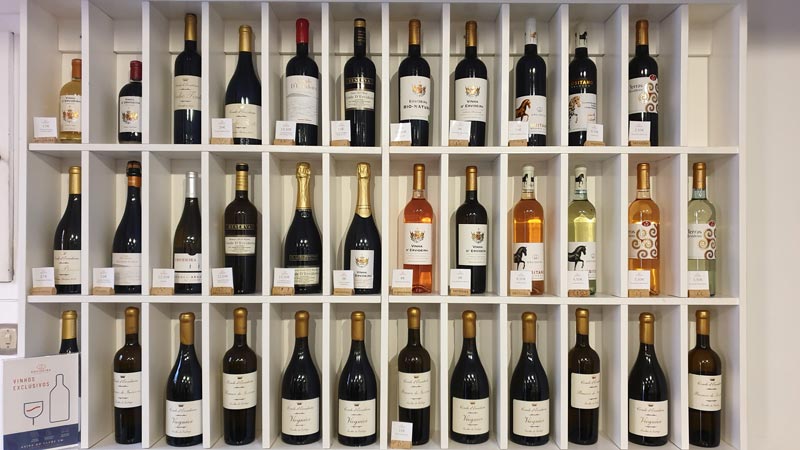
The city is also well known for its wine, thanks to the numerous wineries surrounding it. A wine-tasting session is highly recommended. You don't even need to leave town to visit a large estate to do a tasting; along the main street of the old town, several wine shops offer tasting sessions accompanied by thorough explanations.
Particularly recommended is the lovely shop of the Ervideira winery: Ervideira, an exclusive boutique winery hosting an excellent wine-tasting workshop, after which visitors are often tempted to purchase some of the wines and accessories at very attractive prices.
Recommended Restaurant:
A wonderful, authentic restaurant offering high-quality Portuguese cuisine, good wine, very reasonable prices, and impeccable service, located just outside the old town with ample parking nearby, is:
O Parque dos Leitões The restaurant is open for both lunch and dinner.

Near Évora, about a 15-minute drive west of the city center, lies an intriguing archaeological site: Centro Interpretativo dos Almendres. This prehistoric megalithic monument features a circle of massive standing stones, reminiscent of England's Stonehenge.
Aqueduto da Água de Prata (Silver Water Aqueduct) - Near the city stands a large, impressive aqueduct reaching the town from the northwest, with several major roads passing directly beneath its arches.
