Travel Guide to Lisbon - Portugal
General Information
Lisbon, the capital of Portugal, a city where modernity goes hand in hand with ancient buildings from days gone by, is a fascinating and special tourist destination where history is woven into almost every step. It is considered one of the oldest capitals in Europe. The city is built on seven hills, interspersed with narrow and picturesque alleys. At the top of each hill is a unique viewpoint with a different perspective of the city and its scenery. It is recommended to tour and explore the city with local guides who will enrich your travel experience and reveal the interesting sites, spectacular viewpoints, alleys, restaurants, cafes, and vibrant markets.
Book recommended tours in Lisbon from Viator:

|
Did you know? Beneath the shopping area in central Lisbon lies an underground Roman city with rooms, stairs, and bridges. |
Lisbon sits on the northern bank of the Tagus River (Tejo) and serves as a gateway to the Atlantic Ocean. Its port is considered one of the largest natural ports in the world.
Lisbon (in Portuguese: "Lisboa") was founded in the 12th century BC as a Phoenician trading post, and since then the Greeks, Romans, Visigoths, Muslims, and Christians have passed through it. Its "Golden Age" was in the 15th and 16th centuries when Portugal was a maritime empire and from it set forth the great voyages of discovery of Vasco da Gama, Magellan, and Henry the Navigator. Back then, it became the global capital of a kingdom ruling over lands in different continents, from Brazil in South America to Macau, China, and India in Asia. During this period, impressive monasteries and magnificent palaces were built in and around the city.
Recommended Hotels in Lisbon:
The 7 Hotel
|
♦ Car rental from the reliable and convenient website Booking: Booking.com
Tours in Lisbon for Cruise Ship Passengers
Today, cruise ships among the largest and most luxurious in the world visit the port, with at least one ship arriving in Lisbon almost every day. The port is centrally located in the city, making it easy and convenient to tour many tourist attractions on foot. For cruise passengers who do not want to take the expensive and crowded shore excursions offered by the ship, you can book recommended, cheaper, and smaller-group guided tours here from Viator that are tailored for cruise passengers, meaning they pick you up from the port and return you to the port:
Recommended tours from Viator tailored for cruise ship passengers with port pickup:

In 1755, a severe earthquake with a magnitude of 8.9 on the Richter scale struck the city. The massive quake (which was felt as far away as Norway) caused a large fire and enormous tsunami waves that flooded the city. 40,000 people were killed and a large part of the city, including the Royal Palace, was destroyed to the ground. Ironically, the oldest district, Alfama, was barely damaged and currently serves as the best place to see what Lisbon was like in the distant past with narrow, winding alleys, steep streets, small squares with churches, and ancient buildings decorated with light blue tiles. The district, built in a Muslim style and formerly a poor quarter, now offers authentic cafes where local Fado music constantly plays, and small shops. It is easy and fun to get lost in the district's alleys. It is recommended to visit St. George's Castle (Castelo de Sao Jorge), which is also located in the Alfama district. The castle was built in the 6th century by the Romans and later also served as the royal palace for several centuries. Today, you can climb the castle walls and enjoy the impressive view of the city.

The city was restored thanks to the king's personal advisor at the time, the Marquis of Pombal. Wide streets, impressive buildings, and sprawling squares were built in the city center, and it is a delight to wander through them and admire their scale and architecture.
During World War II, thanks to Portugal's neutrality, Lisbon was unharmed and many wealthy people from European countries fled to it and lived in peace far from the horrors of war. A giant statue of "Christ the King" (Cristo Rei) 28 meters high stands on a Greek column with its arms outstretched to the sides, reminiscent of the famous statue in Rio, Brazil, standing on the left bank of the river. It was built in honor of the peace that prevailed in the country during World War II thanks to this neutrality.

Leading to the left bank where the statue is located and where there are other (non-touristic) neighborhoods is an impressive bridge that is a replica of the "Golden Gate Bridge" in San Francisco.

The bridge is named the 25th of April Bridge in honor of the date the dictatorship ended in the country in 1974. Antonio Salazar ruled the country as a dictator for 42 years from 1932 until his rule ended in 1974 in a peaceful coup without a single shot and with no fatalities. Since then, Lisbon has been awakening, progressing, and developing rapidly; it joined the European Union and even organized the last world expo of the twentieth century: Expo 98.
|
Did you know? In Lisbon there is another impressive bridge called the "Vasco da Gama" Bridge, which is considered the longest bridge in Europe. |
The residents of Portugal in general and Lisbon in particular are friendly, tolerant, relaxed, and most of them speak excellent English. It is easy and convenient to get around the city in English. Lisbon is considered the cheapest capital in Europe; you can find a coffee or pastry for one euro and wine and beer at a cheap price. The café culture as well as nightlife are very well-developed, and it is considered one of the most vibrant capitals in Europe. In addition, it is considered one of the safest capital cities in Europe.
A short video about the scenery of Lisbon:
The Neighborhoods of Lisbon
Lisbon is divided into several neighborhoods that differ in their character, history, and the population living in them.
Alfama District, "The Upper District" in Bairro Alto
The most touristed districts are the Alfama District, and "The Upper District" in Bairro Alto, which is considered the nightlife district of the city. Built in the 17th century and composed of narrow paved alleys, the district is closed to vehicle traffic at night and includes countless restaurants, designer shops, night clubs, Fado clubs (the characteristic melancholic music of Portugal), karaoke, and pubs, and it buzzes with life until the wee hours of the night.
Chiado District
Adjacent to it is the modern Chiado District, which abounds with sparkling shopping centers, street performances, and is famous for its popular café "A Brasileira" (Coffee a Brasileira).
Baixa District
This district was completely destroyed in the earthquake, was restored, and currently includes Lisbon's most famous and central squares: Rossio Square, where the city's central railway station, the National Theater, and also a monument in memory of the 5000 Jews killed in the city during the Inquisition are located.
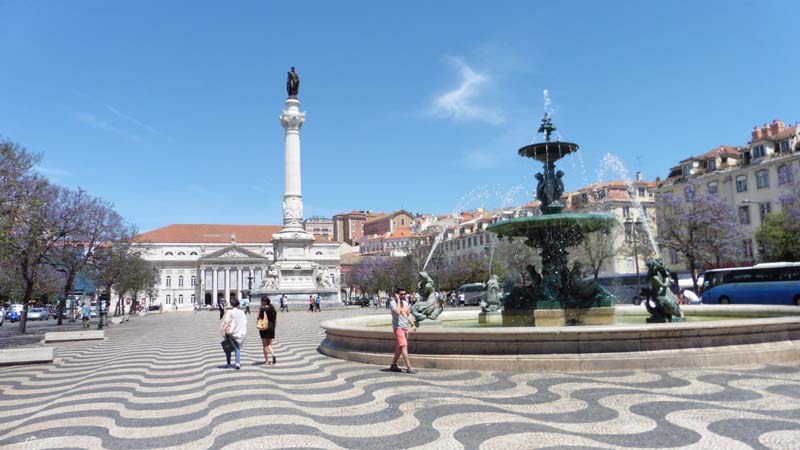
Commerce Square (Praca do Comercio) - a large plaza surrounded by impressive government buildings with a giant statue of King Jose I on his horse in its center. The square is considered the "Gate of the City". Adjacent to the square is a triumphal arch, which you can climb (for a modest fee) to overlook the square, river, and port.

The district features sprawling pedestrian malls full of shops and restaurants. A popular attraction in the district is the Santa Justa Lift (Ascensor de Santa Justa) - an iron elevator designed by one of Eiffel's students (and resembling the famous tower from Paris in its structure) connecting the lower city to the upper district. An impressive view of the city can be seen from the elevator.

Belém District ("Bethlehem")
The district features several impressive buildings considered "must-see" destinations in the city:
Belém Tower (Torre de Belem), declared a UNESCO World Heritage site, which served from the late sixteenth century as a harbor watchtower, later served as a prison, and today is a monument to Portuguese explorers. You can enter the building for a different perspective on the city and the river.

Close by is located the most impressive monastery in the city: Jerónimos Monastery (Jeronimus Monastery) - where the tomb of Vasco da Gama and many important figures from that period lie. The monastery, built in Gothic style, includes many decorations from the maritime world: sea monsters, fish, corals, and ropes.

Do not miss the famous and ancient bakery Pastéis de Belém, which specializes in a local pastry that gave the bakery its name. This is a small, warm, and sweet pastry made of thin puff pastry filled with vanilla custard. Not to be missed! You can watch the preparation of the wonderful pastry on site (which is best eaten hot and fresh).

Nations Park (Parque das Nações)
The Expo 98 exhibition complex turned into a modern park considered an "architectural gem", vibrant and full of attractions. This is essentially a long promenade including a giant aquarium (one of the largest in the world), an observation tower, a marina, a casino, a cable car, modern shopping centers, and a variety of trendy restaurants.
Eduardo VII Park (Park Eduard VII)
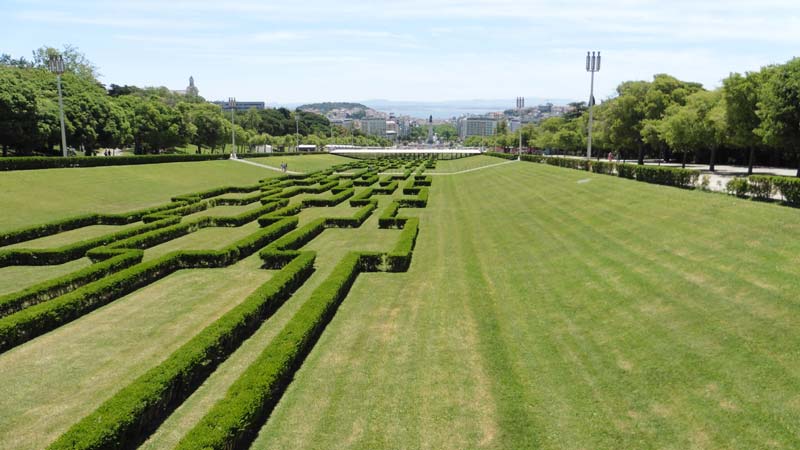
Additional successful viewpoints of the city are from Eduardo VII Park (Park Eduard VII), which overlooks Freedom Avenue (Liberdad), considered Lisbon's "Champs-Élysées" with an abundance of sparkling and luxury designer shops, as well as from Miradouro São Pedro de Alcantara, located at the top of one of the seven hills.
|
Did you know? In Lisbon is located the "Stadium of Light" (Estádio da Luz), one of the largest and most famous stadiums in Europe, which is the home stadium of the local team "Benfica". |
Museum and Doll Hospital in Lisbon (Dolls Hospital)
A successful destination for doll lovers, a place where a short and comprehensive guided tour is conducted at the doll hospital to which dolls are sent for repair from all over the world.


After the guided tour of the hospital, you tour several rooms in the museum featuring dolls of all types and sizes from all over the world. On the ground floor there is also a cute little shop.
A special and cool place in central Lisbon that is worth dedicating a short hour to. Located right next to Praça da Figueira Square.
Google Maps Address: Praça da Figueira 7, 1100-240 Lisboa


Weather:
Lisbon is a sunny city, with pleasant weather most months of the year. In summer it can be hot like in Israel, but in winter it is much warmer than most other European capitals, with temperatures only rarely dropping below 10 degrees Celsius in winter. The most pleasant months to visit are April to June and September-October.
Transportation:
Lisbon has a convenient and efficient subway. In addition, there are buses and trams, including a successful tourist route - Tram 28, an old yellow tram that runs a circular route between the tourist neighborhoods in the city center. But the most successful way to tour the city is on foot - wandering the streets and alleys, thanks to the relatively compact size of the city. Many frequent ferries running from the right to the left bank cross the wide river.
Food and Drink:
The residents of Lisbon love fish, especially cod fish, and they boast 100 different ways of preparing cod... Octopus is also a common dish in most restaurants.
Lisbon also boasts its excellent pastries - the most popular: Pastel de Nata and "Bolo de Arroz" (local rice cake). The Portuguese love sweet, high-alcohol spirits: the most popular of all is a cherry liqueur called Ginginha usually served in a glass made of chocolate. A successful and delicate wine popular in the city is "Vinho Verde" - green wine.
Guided Tours in Lisbon:
You can travel alone in Lisbon, but it is recommended to tour and explore with local guides who will reveal the city's secrets, explain the destinations and attractions, and enrich your travel experience. Details can be found in the article: Guided tours and excursions in Lisbon and its surroundings.
Recommended Trips Outside of Lisbon
Sintra
Details can be found in the article: Guided tours and excursions in Lisbon and its surroundings.
A must-do tour outside of Lisbon is to Sintra, located 40 minutes from Lisbon. Sintra is a picturesque town located in the center of a hill ridge overlooking the sea. You can get to Sintra by train, rental car, or on a half-day or full-day tour.

Trip to Sesimbra, Azeitão, and Setúbal:
A successful "advanced" tour off the beaten tourist track is a full-day tour south of Lisbon including a visit to a charming fishing village named Sesimbra, a national park named Arrábida Natural Park, the city of Setúbal, a charming town named Azeitão, and a winery with gardens.
♦ Recommended guided tours from Lisbon to destinations outside the city from Viator: