Croatia Travel Itinerary from Dubrovnik to Korčula Island
Dubrovnik serves as a convenient starting point for trips in the southern part of Croatia, an area abundant in beaches, ancient towns, and especially islands.
Dubrovnik:
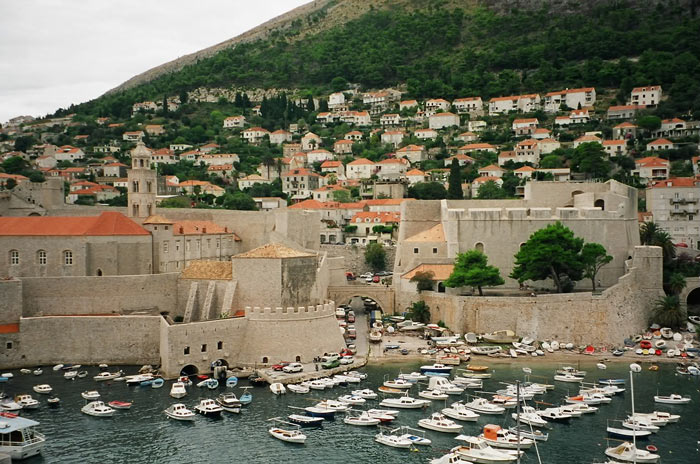
Recommended Dubrovnik tours from Viator:
♦ Guided tour of Dubrovnik Old Town including a cable car ride for a fantastic view of the city
Dubrovnik Cable Car Ride and Old Town Walking Tour
♦ Guided walking tour of the Dubrovnik City Walls
Dubrovnik Combo Tour: Old Town & Ancient City Walls
Tour duration is about 3.5 hours.
♦ Book a guided kayak tour in Dubrovnik from the popular Viator site - Dubrovnik: Sea Kayaking & Snorkeling Tour
A two-hour cruise including snorkeling near the city walls and next to the adjacent Lokrum Island.
This itinerary combines scenic driving along picturesque coastlines, visiting impressive botanical gardens, exploring ancient towns, and taking a ferry ride to a large and fascinating island. You can do this as a fairly packed full-day trip and return to overnight in Dubrovnik, or divide the itinerary across two relaxing days with an overnight stay on Korčula.
Recommended hotels along the route:
In Korčula:
Hotel Korsal
A 4-star hotel located a 5-minute walk from the Old Town center, offering air-conditioned rooms with sea views.
Apartments Ivančević
Four air-conditioned vacation apartments located 200 meters from the Old Town and the beach.
Each apartment features a balcony or patio and an equipped kitchen.
Two air-conditioned holiday apartments located 200 meters from the sea. The apartments feature an equipped kitchen and a balcony overlooking the sea.
Villa Ana
A typical Dalmatian-style stone house featuring three fully equipped holiday apartments, each with a balcony. The building is situated between two bays, just 200 meters from the sea.
In Dubrovnik:
♦ Recommended hotels in Dubrovnik
Route Distance
The route length is 133 km and the driving time is approximately two hours and fifteen minutes.
Route Description
From Dubrovnik, drive north along Road No. 2, which winds along the coastline. The road passes scenic bays with great swimming beaches and a blend of historic buildings alongside modern, upscale structures. Continue driving until reaching the town of Trsteno, considered one of the most picturesque and charming towns in the Dubrovnik region. The main attraction in this town of 250 residents is The Trsteno Arboretum, spanning 63 acres. These gardens, currently belonging to the Croatian Academy of Sciences and Arts, were founded at the end of the 15th century by the Gozze family as a summer park adjacent to their villa. The arboretum boasts an impressive collection of exotic flora from across the globe. In 1991, during the war in Yugoslavia, substantial sections of the gardens were damaged by fire due to bombings; fortunately, the oldest and finest parts remained almost unharmed. At the center of the gardens stand two massive, unique European plane trees roughly 400 years old. The grounds also feature sculptures, a small pool, and a fountain. From the cliff near the villa, visitors can enjoy a spectacular panorama of the sea.
From Trsteno, continue heading north toward the Pelješac peninsula, renowned as one of the most romantic settings along the Adriatic Sea. It is a long, narrow strip of land showcasing bays, white sandy beaches, dramatic rocky cliffs, olive and oak groves, as well as sprawling vineyards and numerous wineries. The region is famous for producing quality wines and enjoying pleasant weather throughout most of the year.
Right at the entrance to the peninsula, merely a few kilometers off the primary coastal highway (Road No. 2), lies the area's most fascinating town, Ston. Home to roughly 600 residents, it sits on land inhabited since prehistoric times. The Romans also left their imprint, but Ston experienced its most significant developmental surge beginning in 1333, when the Republic of Dubrovnik took control of the region and proclaimed Ston its second most important city. That same year marked the start of construction on monumental defensive walls stretching 5.5 km, complete with numerous towers and bastions. Upon completion, it was hailed as Europe's longest fortification system and the second longest in the world after the Great Wall of China! A walking tour along the wall comes highly recommended. Preserved nearly in its entirety, the wall was built to safeguard this strategically vital city and its greatest natural treasure: salt.
The city's cornerstone industry throughout those eras was salt production. Salt harvesting continues in the region to this day, and several salt evaporation pans remain visible right by the historic center.
Ston:
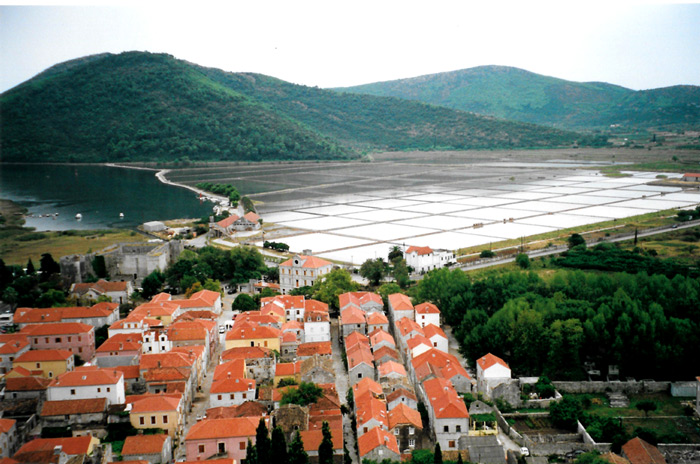
In 1996, Ston was struck by a severe earthquake that added destruction to the scars left by the recently ended war. However, encouraged by the municipality, locals dedicated themselves to rebuilding their damaged properties; today, the historic core of Ston stands as a meticulously restored, pristine gem. It is a medieval town filled with narrow alleys, lush flowers, greenery, and protected historical monuments. Notable sights include Fort Kaštio (Corona), which offers striking views, the 14th-century Church of St. Anthony, and the Church of St. Michael, which dates back to the Early Middle Ages and holds considerable historical value.
Today, the area is also celebrated for the abundant oyster farms cultivated by the local community.
Ston and its neighboring settlement, Mali Ston—linked by the grand defensive wall—are both built beside deep bays and feature wonderful coastal access. They are widely regarded as prime spots for fishermen and are well known for exceptional seafood establishments. Particularly recommended is the restaurant at Vila Koruna, acclaimed as the oldest dining venue in the area. Set within a beautifully restored heritage building, the upscale restaurant serves regional seafood delicacies, delivering a genuine gastronomic treat.
Ston:
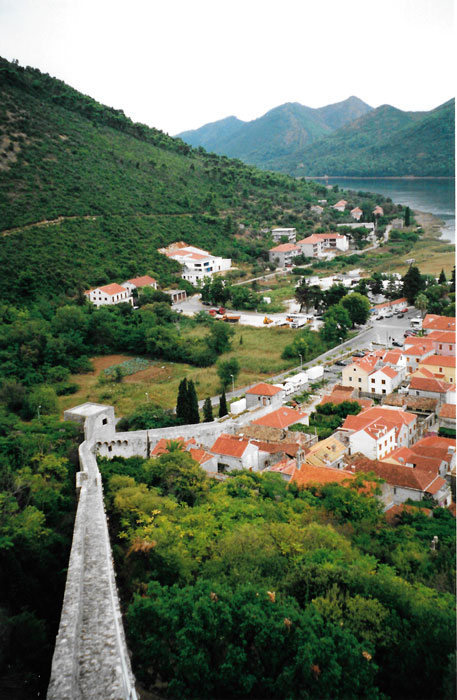
Ston also hosts an excellent, modern campsite known as Prapratno Campsite, situated just 3 km west of the town in a picturesque cove with the peninsula's most beautiful beach. The site accommodates 1,200 guests and overlooks idyllic views of Mljet Island. Adjacent to the campground is a small holiday village with 80 beds.
From Ston, follow the solitary road crossing the Pelješac peninsula until you arrive at the town of Orebić, located in the southwestern portion of the peninsula.
Orebić is a scenic, sun-drenched town (of about 1,500 residents) positioned at the eastern entrance to the Pelješac Channel and framed by rolling hills. In earlier times, it was a pivotal maritime hub and ranked among the most prominent shipping communities in the eastern Mediterranean. During the 19th century, it even harbored some of the world's largest shipyards of the era, crafting majestic sailing vessels. When steamships began superseding sailboats, the community endured difficult periods, yet navigation and maritime trades remained the most prestigious vocations locally for generations. The town itself was named after an illustrious 16th-century family of sea captains. Today, a Maritime Museum showcases the region's illustrious naval legacy.
Today, tourism has superseded the shipping trade, and the town is teeming with hotels, resorts, long sandy stretches, small coves with crystal-clear water, various sporting amenities (particularly water sports such as windsurfing and sailing), and plenty of eateries specializing in fresh seafood and local varietals (Dingač, Postup). The town features an attractive marina and a selection of imposing sea captains' villas along the waterfront, surrounded by lush gardens filled with Mediterranean flora (such as olive trees, cypresses, pines, lemon trees, and almond blossoms) that are wonderful to stroll through. The premier landmark in town is the Franciscan Monastery and the Church of Our Lady of the Angels (Gospa od Anđela), built in the 15th century and perched 152 meters above sea level, offering an awe-inspiring vista over the peninsula, surrounding islands, the sea, and cruising vessels. Boats passing through the Pelješac Channel beneath the sanctuary traditionally sound their horns three times in greeting, answered by the ringing bells of the friars producing a melodic and distinctive chime. The town maintains a lively summer ambiance, hosting numerous festivals and heritage religious observances.
The grandest festival of all is the Feast of Our Lady of Mount Carmel, celebrated annually on July 16th.
The island of Korčula is located just 2.5 km across the channel.
Orebić provides year-round regular ferry connections to Korčula. Ferries for travelers with vehicles operate numerous times throughout the day.
The crossing takes 15 minutes each way, docking at the ferry terminal located 2 km outside Korčula town center.
The company Mediteranska Plovidba operates a passenger-only foot ferry (no vehicles),
running 5–13 times daily (subject to seasonal and weekly schedules) straight to Korčula's Old Town harbor, with a crossing time of just 10 minutes.
You can also reach Korčula Island by direct ferry from Dubrovnik (on select days).
Korčula is the sixth-largest island in the Adriatic Sea, spanning an area of 280 sq km. It stretches 47 km in length, with widths ranging between 5.3 km at its narrowest point to roughly 8 km at its widest. The island's total population stands at 17,000 residents, with the largest towns being Vela Luka and Korčula Town.
Korčula:
Guided tours in Korčula from Viator:
The island features a vast number of bays—some easily accessible, while others, especially on its southern shores, remain tucked behind precipitous cliffs. Korčula is also recognized as one of Croatia's most heavily forested islands: over 60 percent of its landmass is blanketed by dense vegetation that shelters numerous songbirds. The surrounding waters are rich in fish, crabs, shellfish, and other marine life, which feature routinely on restaurant menus across the island.
The topography consists of low mountain ranges, with the highest peak (Klupca) reaching 568 meters.
Inhabited since the Bronze Age, traces of ancient life have been uncovered at numerous archaeological sites island-wide. The Greeks arrived during the 6th–5th centuries BCE, naming it Korkyra Melaina ("Black Korčula") owing to its dense timber forests. The island was integrated into the Roman Empire in 35 BCE.
From that era onward, ownership and governance of the island changed frequently, often at a rapid pace. Among others, it was held by the Republic of Venice (across three separate eras), the Austro-Hungarian Empire, the Republic of Ragusa (Dubrovnik), Austria, France, Russia, and even Britain. The most prominent architectural legacy was left by the Venetians, seen clearly throughout Korčula Town.
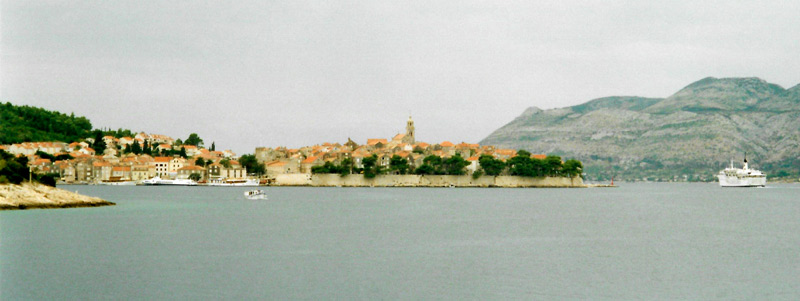
The town of Korčula is situated on the northeastern coast of the island. It is a tourist-friendly port town whose historic center, encircled by defensive ramparts and round watchtowers (of which portions remain standing today), sits on a small oval peninsula enclosed by the sea on all sides. Many refer to it as "Little Dubrovnik" because of its architectural splendor and stylistic heritage. In its current form, the core was established in the 13th century during a phase of regional growth and prosperity. Most notable sights in Korčula are clustered around the main cathedral square. St. Mark's Cathedral (Katedrala Sv. Marka) is the town's most imposing monument, built during the 15th century by acclaimed Italian stone masters. Directly south stands the Bishop's Palace, which preserves church relics alongside distinguished collections of Italian and Croatian Renaissance art. North of the cathedral lies the modest Church of St. Peter, likely the oldest surviving sanctuary in town (11th century). On the western edge of the square stands the Church of Our Lady (Crkva Gospojina) adjacent to the Gabriellis Palace, regarded as one of the town's finest structures, which houses the Town Museum displaying ancient Greek ceramics, Roman everyday artifacts, and stonemasonry. Nearby, you will find other aristocratic residences including the Ismaelis Palace and Arneri Palace. The walk encircling the Old Town begins by crossing the Punat bridge, which provides the main entrance. You may also want to see the town's first modern hospitality establishment, Hotel Korčula, which opened its doors in 1912. The hotel boasts a terrace widely recommended for watching the sunset, especially during early summer when the sun dips directly into the channel between the island and the mainland. Another excellent vantage point is the hilltop above the town along Bernardo Bernardi Street, where the English Forteca tower stands (now functioning as a communications site). From the tower's summit, there is a sweeping panoramic view over the archipelago surrounding Korčula, Mljet Island to the east, the Pelješac Channel and Hvar Island to the west, as well as the Old Town and Mount St. Elijah to the north.
Locals maintain that legendary explorer Marco Polo (1254–1324) was born in Korčula, and visitors can even tour the residence claimed to be his birthplace, situated near the cathedral.
Beyond its historical monuments, the town offers a lovely marina located on its eastern flank and an abundance of recreation facilities, focusing primarily on aquatic activities. Visitors can charter sailboats and yachts to cruise through the surrounding islets.
Although the local lifestyle has evolved considerably over the generations, particularly throughout the latter half of the 20th century, many venerable traditions connected with sacred holidays and family events remain well preserved here (more so than anywhere else in the area). During celebrations—such as St. Martin's Day on November 11th, St. Catherine's Day on November 25th, Christmas, and New Year's—groups of children and youths go around villages and neighborhood households singing age-old carols, receiving treats, dried fruits, oranges, and coins in return.
These festivities are often enriched by genuine folk dances performed in traditional attire.
One of the town's emblematic traditions is the centuries-old Moreška sword dance, which commemorates the victory over Ottoman invaders. The performance portrays a clash between the White King's army and the Black King's forces fighting to rescue a princess abducted by the Black King. From the 12th century onward, and notably during the 16th and 17th centuries, this dance was staged across Mediterranean regions including Spain, Italy, France, and even England; today, however, it survives exclusively in Korčula. In past eras, the dance took place only during festive days—principally the Feast of St. Theodore on July 26th—but owing to its immense popularity among visitors, multiple performances are staged throughout the summer season across diverse venues.
Korčula is also dubbed the "Island of Wines" on account of the high-caliber vintages produced here. Be sure to sample classic sweet pastries sold on the island, such as Cukarini and Prikle.
After touring Korčula's Old Town, consider taking a drive to the seaside resort of Lumbarda, nestled at the southeastern tip of the island just 7 km from Korčula's historic quarter. This picturesque hamlet offers some of the finest sandy swimming spots on the island, is surrounded by roughly 20 tiny islets, and features charming waterfront taverns overlooking breathtaking vistas. The village is flanked by vineyards cultivating the distinct Grk white wine.
Venturing 42 km toward the northwest leads to Vela Luka, the island's largest settlement and its chief fishing center. The drive passes numerous sheltered bays dotted with attractive modern residences built in recent years, many serving as peaceful holiday rentals for those seeking to escape the busier resort areas. Vela Luka itself is more understated in appearance, yet it is immersed in unspoiled natural scenery that has been preserved with care. The area is noted for its restorative and wellness centers, such as the Kalos Medical Rehabilitation Center situated at the head of the bay, which harnesses curative marine mud and mineral waters to treat rheumatic and related conditions. For visitors seeking tranquility, idyllic beaches, and fresh seafood dining, small passenger boats depart from Vela Luka to the nearby islet of Proizd, known for clear waters and grill restaurants preparing freshly caught fish and meats.
Near Korčula lie several additional islands that make rewarding day excursions: Hvar Island is situated 7.7 nautical miles from Korčula, and Mljet Island, featuring an intriguing national park, sits 9.4 nautical miles away. Ferry services and guided boat excursions to both destinations depart regularly from Korčula.
To comfortably experience all the locations highlighted in this guide, you will need at least two full days. To that end, an overnight stay in either Korčula Town or the coastal village of Orebić is highly recommended.