Travel Destinations and Attractions in Hanoi
Hanoi, the capital of Vietnam located in Northern Vietnam, is a huge city with a population of over 7 million inhabitants. The city itself is a popular destination for tourists from around the world who travel within it and its surrounding areas, but it also serves as a departure point for fascinating trips in Northern Vietnam, such as to the magical Ha Long Bay with its towering islands, to "Tam Coc" with its cliffs and caves among the rice fields where the largest pagoda in Vietnam is also located, or to the city of Sapa surrounded by villages with residents from various ethnic minorities wearing colorful and unique traditional clothing who cultivate eye-catching rice terraces. It constitutes the main gateway for travelers in Northern Vietnam.
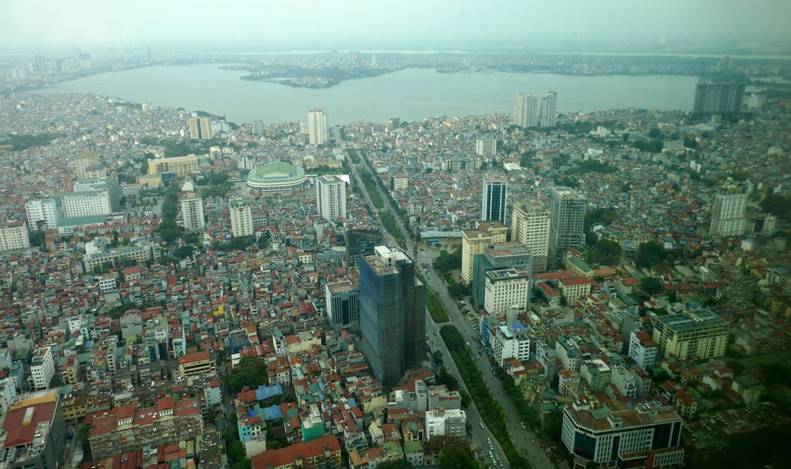
A little history: Hanoi was founded in 1010 and was the political capital of Vietnam until 1802 when the capital was moved to the city of Hue until 1945. Hanoi was captured by the French in 1873 and after a few years became the administrative center of French rule in Indochina until 1940, when rule passed into the hands of the Japanese Empire until 1945. After the surrender of the Japanese in World War II, the French returned to rule it until they were defeated in war and withdrew from it in 1954. Since then it served as the capital of North Vietnam, and after the surrender of South Vietnam in its war against the North in 1975, Hanoi became the capital of all of Vietnam. The number of residents in it grows every year and the momentum of its development and construction (like that of the entire country) is immense.
Hanoi is a city of contrasts combining old versus new, narrow alleys with tiny apartments versus skyscrapers, dense and busy markets versus modern and glittering shopping centers. Churches alongside pagodas.
♦ Recommended tours in Hanoi city (bookable on Viator):


Hanoi is a busy and congested city with crowds of motorbikes sometimes carrying 3-4 people. The sidewalks in the city center have been informally but widely turned into parking for the many motorbikes, so pedestrians wander on the road alongside all modes of transportation. Crossing the street is a challenging experience both at pedestrian crossings and in the middle of the road - you raise a hand and walk between cars, bicycles, and motorbikes that flow around you somehow without hitting you, but also without stopping...
The most vibrant part of the city is in its Old Quarter located north of and adjacent to a beautiful lake named Hoan Kiem Lake.

It is especially rewarding to visit the area on weekends when the entire area around the lake and several streets in the adjacent Old Quarter turn into pedestrian zones with no vehicular traffic: from Friday evening until Sunday evening.
The touring and entertainment options in the city are numerous: the city features vibrant day and night markets, large and bustling pedestrian streets on weekends, a wide variety of restaurants and food stalls with various special dishes, ancient pagodas, special theater shows, interesting museums, observation towers, shopping centers, and quality hotels with courteous service.

♦ Recommended tours outside of Hanoi (bookable on Viator):
Accommodation in Hanoi
It is recommended to stay in Hanoi for a few days in a pampering hotel and set out on a variety of independent and/or guided tours in the city, including successful food tours, as well as day trips to nearby villages and attractions outside of Hanoi (so-called star trips).
Note that on weekends many streets near the Old Quarter and around Hoan Kiem Lake are closed to vehicles, so there is no vehicle access to hotels located on these streets.
Recommended Hotels in Hanoi
Melia Hanoi – An impressive and successful five-star hotel wonderfully located 650 meters (less than ten minutes' walk) from Hoan Kiem Lake, in a central yet quiet location outside the chaos of the Old Quarter. The hotel has a casino, an outdoor pool, a gym, and a spa. The hotel has restaurants and a bar. The breakfasts here are among the best available in the city. Free internet. In 2019, North Korean leader Kim stayed at the hotel when he met with President Trump.

InterContinental Hanoi Westlake – A charming five-star resort located on the shores of and over West Lake. Consisting of low-rise buildings, most of which are situated within the lake and connected to each other by bridges over the water. Every room has a view of the lake or pool. The hotel features a beautiful pool surrounded by lush vegetation and pampering sun loungers, a gym with yoga and Pilates classes, and a spa. The hotel has a sunset-view bar and restaurants. The hotel serves excellent and diverse breakfasts. Located about 4.5 km from the center of the Old Quarter, ideal for those seeking peace and tranquility even while living in a large, vibrant city. Arriving at the hotel feels like being on a magical island. Free internet.

MK Premier Boutique Hotel – A successful and comfortable 4-star hotel in the heart of the Old Quarter on one of the streets that turn into pedestrian zones on weekends.
The hotel features a cafe, bar, and restaurant, good breakfasts, and a terrace overlooking the Old Quarter. The hotel has a shuttle service (by prior arrangement) to the airport. Free internet.
Silk Path Boutique Hanoi – A high-quality 4-star hotel adjacent to Hoan Kiem Lake and near the Old Quarter with views overlooking the lake. Good breakfasts. The hotel features a bar and restaurant. Free internet. Airport shuttle service available for an additional fee.
Shopping and Markets
In Hanoi there are crowded markets selling everything under the sun, clothing, fabrics, bags, suitcases, food, and more. Bargaining in the markets is advisable as tourists are offered higher prices. There are also, of course, many brand imitations. The market is very crowded and the aisles are so narrow that some vendors sit on their merchandise due to lack of space. The area naturally lacks air conditioning and is usually very hot and humid.

It is also worth strolling through Hanoi's vibrant night market located in the Old Quarter on Hang Dao Street, which starts near Hoan Kiem Lake heading north. The market is active only on Friday, Saturday, and Sunday evenings.

I also recommend a different shopping experience at the AEON Shopping Center, located about a twenty-minute drive east of Hanoi's Old Quarter. In this center, belonging to a quality Japanese shopping mall chain, you can do your shopping in an air-conditioned venue with many real brand stores, not cramped like in the market, with fixed non-negotiable prices.

Prices in some stores are highly attractive and the goods are high quality. The center also has a massive level with a very wide variety of restaurants, and those visiting with children will find plenty of amusement facilities for both toddlers and teenagers. There is also a large supermarket on site.

Attractions in Hanoi
Cyclo Tour in Hanoi's Old Quarter
During a 45-minute tour on a cyclo—a tricycle pedaled by a local Vietnamese driver while you sit comfortably and take in the streets of Hanoi's Old Quarter—you will view shopfronts, restaurants, street vendors, and pedestrians. You will experience the traffic flow of motorbikes, cars, and pedestrians on the crowded roads. It is hard to comprehend how traffic flows through intersections without traffic lights or stop signs while pedestrians cross the streets. Drivers let each other merge smoothly into traffic without barging in abruptly or cutting across lanes suddenly, but rather gently and gracefully. They also sound plenty of warning honks to draw attention, not out of anger.

Large and Vibrant Pedestrian Zone Around Hoan Kiem Lake
Hanoi has a charming lake named Hoan Kiem with a small island in its center and a pagoda accessed via a beautiful bridge.

On weekends, all the streets around it transform into a large, colorful pedestrian zone filled with crowds of people, families with children, and tourists.

Along the streets are vendors selling various foods, souvenirs, and toys. Singers, bands, and dancers also entertain the large audience.

Entire streets are closed to vehicles, tables and chairs are set up along the roadways, and large crowds dine outside under the open sky.
Playlist of short videos about Hanoi:
Lotte Observation Tower in Hanoi
The Lotte Building in Hanoi rises to a height of 272 meters, and on its 65th floor sits a fine panoramic observation deck overlooking the city of Hanoi.

The entire city unfolds beneath visitors' feet, including its lovely lakes, and there are also glass-floored skywalk balconies. The observation deck provides a great sense of orientation over the city, its layout, various quarters, and its massive scale. A "heart" theme takes center stage throughout the observation floor, offering plenty of fun photo opportunities.

This huge building features a hypermarket in the basement and a luxury department store on floors 1–6. Floors 8–31 house various offices, topped by a hotel and residential apartments on floors 33–64, capped off by the observation deck at the peak. Admission to the deck is charged (around $10), but discounts are available for children and families, along with a 50% discount during morning hours between 08:30–10:30 and at night between 22:00–23:00.
Short video about the observation deck at Lotte Tower:
Visiting Pagodas
Tran Quoc Pagoda is a picturesque Buddhist pagoda, the oldest in Hanoi, dating back to the sixth century AD. The pagoda is situated on a small islet in the southeastern part of West Lake (Ho Tay).

Another famous pagoda in Hanoi is a small shrine named One Pillar Pagoda. As its name implies, it is a small pagoda originally built on a single wooden pillar, though over the years it was renovated and today stands on a stone pillar in the middle of a small pond. The pagoda was built by Emperor Ly Thai Tong, who ruled between 1028 and 1054. The pagoda is located near the southern portion of West Lake.

Scientific and Cultural Center – Temple of Literature
The Scientific and Cultural Center is located in central Hanoi on the grounds of the city's first university, where historically only the king's children and close associates studied, and later top-performing students. Student classes from across Northern Vietnam come here to conduct ceremonies wearing traditional academic regalia, much like graduation ceremonies at universities abroad.

The site also features a temple dedicated to Confucius. The center is located about 1.5 kilometers west of the Old Quarter.

Ho Chi Minh Mausoleum
At this site honoring Vietnam's revered leader, Ho Chi Minh, the main "attraction" is a square monument clad in gray, black, and red stone, housing the embalmed body of Ho Chi Minh inside a glass display case with an honor guard at its side. Opposite the main structure lies a spacious plaza.

Nearby, visitors can tour the houses where Ho Chi Minh lived alone. He resided here for 15 years from 1954 to 1969. A tour of the grounds reveals that the leader lived very modestly, evident from the simple, small rooms he inhabited. Surrounding the houses are beautiful gardens with a small lake. The gardens contain around 250 species of plants and flowers gathered from various parts of Vietnam.

Cars used during his travels are also displayed on site. Nearby stands the Presidential Palace, which formerly served the Governor-General of French Indochina.

Museum of Ethnology in Hanoi
Vietnam consists of many ethnic groups and minorities characterized by distinct clothing, customs, and housing styles. In this museum, which is divided into two wings—a standard two-story indoor museum and an outdoor museum featuring traditional homes of various ethnic groups that visitors can explore and tour.

The indoor museum provides extensive information on dozens of different minority groups living in Vietnam. Information is presented through films, artifacts, and traditional clothing accompanied by written explanations.
The museum gives visitors a clear, valuable picture of the diverse and fascinating population of Vietnam.


Visit to Hoa Lo Prison Museum in Hanoi
The prison known as Hoa Lo was used by the French during their rule in Vietnam. They incarcerated Vietnamese rebels who resisted them under extremely harsh conditions, and it was later used by the Vietnamese to detain American prisoners during the Vietnam War. U.S. Senator John McCain, who was a pilot, was held in this prison. The prison was nicknamed the "Hanoi Hilton," inspiring a movie of the same name depicting the living conditions of American prisoners. Captured American POWs were held in preferential conditions compared to local prisoners, which earned it the name "Hanoi Hilton."

Inside the prison museum, visitors can view various cells, some displaying mannequins depicting prisoners. In some cells, prisoners had their legs shackled, while in others they did not. Cells for death row inmates and solitary confinement are also on display. The site includes a guillotine used to execute prisoners. Most of the prison grounds and structures were demolished over the years for high-rise development, leaving only one wing as a museum.
The museum also features a monument honoring the inmates.

The World's Longest Ceramic Mosaic Wall
Along the roads of Hanoi runs an impressive wall decorated with ceramic artwork and mosaics, spanning a world-record length of 3.8 kilometers! It earned a place in the Guinness World Records! The wall was constructed in 2010 to mark the 1,000th anniversary of Hanoi.

The height of the wall varies, and behind it various city buildings can be seen. The wall features artwork created in a wide range of artistic styles.

Short video about the mosaic wall:
Food Tours in Hanoi
♦ Recommended food tours in Hanoi (bookable on Viator):
To better understand Vietnamese cuisine and learn about Hanoi's culinary scene, taking a guided food tour is highly recommended.
A recommended tour operator named Hanoi Food Tasting Tours runs food tours in small groups of up to 6 people.
It is best to take a tour on a weekend when many streets around the lake and the night market turn into a huge, bustling pedestrian zone, minimizing the need to cross streets amid motorbikes and cars...
During this food tour, guests sample seven local dishes, including two desserts. The first course is a finely shredded papaya salad with strips of beef in a sweet and sour dressing. The second course is a thin steamed rice roll filled with your choice of vegetables, shrimp, and more, served topped with cilantro leaves and fried shallots alongside a dipping sauce.

At the third stop, you try a local sandwich known as Banh Mi. You can choose from ten different fillings served inside a soft, delicious baguette adapted locally during French colonial rule. According to the guide, the local version of the baguette is softer because bakers let the dough rise longer to create greater volume using less flour due to limited resources.
Another traditional and highly popular dish among locals is Pho soup, a rice noodle and vegetable soup served in two versions: one with beef slices and the other with chicken. Note that the broth for the beef version differs from the chicken version. The original version was a beef broth flavored with star anise, but because beef was expensive, locals shifted to chicken broth made with onions and no star anise.
Another dish along the way is a savory Vietnamese pancake called Banh Xeo, wrapped in rice paper with fresh herbs and dipped in sauce.
For dessert there are two stops: at one, you can choose a dessert from dozens of traditional options in a restaurant owned by a member of the Hmong minority tribe. For example, sweet longan fruit with lotus seeds in sweet syrup, sticky rice with coconut ice cream, or mango with sticky rice.
The next dessert spot specializes in serving Egg Coffee—Vietnamese coffee topped with whipped egg yolk and sweetened condensed milk instead of regular milk.
A recommended restaurant in Hanoi's Old Quarter is Duong's. The restaurant serves tasty, beautifully presented dishes. Owned by a local chef who reached the finals of Vietnamese "MasterChef," it has two locations in the Old Quarter. Nearby, they also organize a highly recommended, high-level cooking class held in both the morning and afternoon.

Attending a Theater Show
The most popular show in Hanoi, considered one of its signature symbols, is the Water Puppet Show.
This performance is presented entirely by puppets controlled via string or rod in a pool of water, with operators hidden behind the scenes (visible only when taking their bow at the end of the show). The performance is accompanied by traditional local music. It consists of numerous vignettes depicting everyday scenes of local life: working in rice fields, fishing, and more. Similar shows take place throughout the country, but the Thang Long Water Puppet Theatre is considered the finest in Vietnam.
A famous and even more impressive show titled "My Village" (Lang Toi)—a bamboo circus show—is performed alternately in two main theater venues in Hanoi. In this show, village life is portrayed through a performance blending acrobatics, music, and large bamboo poles alongside comedic and dramatic stunts.
The show alternates between the following venues: the Hanoi Opera House and the Vietnamese Tuong Theatre, both built during French colonial rule in Vietnam.

Included in the ticket price is a guided pre-show tour of the ground floor and second floor inside the Tuong Theatre, introducing visitors to traditional folklore colors. First, visitors receive an explanation of the primary makeup colors used by performers: red, black, and white, which grant different characters their intended traits. Five iconic masks in distinct colors are then displayed, representing different character personalities. Explanations are also given regarding traditional costumes, weaponry, instruments, and their role in producing sound effects and expressing emotions, along with a visit to a room housing costumes used in past performances.

Touring Nearby Villages Specializing in Ceramics and Silk
Ceramics in Bat Trang Village
Bat Trang Village is located about a 35-minute drive southwest of Hanoi's Old Quarter.
In this village, which resembles an urban suburb more than a rural village, residents specialize in manufacturing and selling various ceramic items. This village also produced the ceramic tiles covering the world's longest mosaic wall—a Guinness record spanning nearly 4 km along Hanoi's roadways.
At the village entrance sits a large market featuring a rich selection of ceramic craftwork, complete with crafting and painting stations for ceramic pieces. There are also numerous items decorated with dragon motifs used for religious purposes.

Women walk the village streets inviting tourists to take tours that include hands-on clay workshops in various homes for a modest commission.
The guide leads to a factory manufacturing large decorative urns costing around $2,000 each plus shipping fees. Inside the factory, you can see how workers shape the urns, create relief patterns, and paint them. The site also features a massive kiln for firing the urns and a large warehouse space.

Another factory produces a variety of kitchenware, vases, home decor, unique lampshades, and more. Their products are sold in an air-conditioned two-story shop, while production takes place on several un-air-conditioned floors above, where visitors are also given the opportunity to hand-paint selected items.
Short video about the ceramic-producing village:
Silk in Van Phuc Village
Van Phuc Village is located about a 40-minute drive southwest of Hanoi's Old Quarter. In this village, which also resembles an urban suburb of Hanoi, residents specialize in manufacturing and selling silk fabrics and garments. The village entrance is adorned with vibrant umbrellas suspended overhead.

Visitors can step inside a shop backed by a silk weaving mill to observe the production stages. Machine noise inside is quite loud. These are automated power looms rather than manual handlooms found in remote villages far from Hanoi, where women weave carpets and textiles by hand. All the village street shops sell garments and goods made of silk as well as other fabric types.

Ancient Mud Houses and Trees in Duong Lam Village
This village is located about 45 km northwest of Hanoi, roughly a 1-hour-and-15-minute drive.
In this village, locals traditionally built their homes from mud and clay. Today, a few ancient homes remain where residents allow tourists to visit and hear stories in exchange for a modest tip.

The houses are constructed primarily of timber frames with clay walls and fences, some of which have been plastered and painted over time for reinforcement. An ancient pagoda is also located on site. A short ten-minute drive away stand several ancient trees bearing grape-sized fruit with fig-like interiors. Tourists are often taken from the village on scenic bicycle rides through rice fields to reach these ancient trees.
