Cruise from Miami to Los Angeles via the Panama Canal on the Norwegian Bliss
♦ Routes (free): Detailed travel itineraries in USA
Attractions and Entertainment on the Ship
Norwegian Bliss is the Norwegian Cruise Line ship built specifically for Alaskan cruise itineraries from mid-May to mid-September. During the summer months, she sails in the Caribbean, and twice a year, she sails a unique itinerary passing through the new, wider Panama Canal. In this article, I will describe the cruise route through the canal and the wonders of the ship itself.

It is worth noting that the Norwegian Bliss was the largest ship until 2018 to pass through the Panama Canal. The ship was launched in April 2018 and weighs 168,000 tons. The number of passengers (at double occupancy) is about 4,000, and the number of crew members is about 1,700.
Last Minute Cruise Deals:

The highlight of the ship and its main innovation is the expansive Observation Lounge (spanning 1,860 square meters!) at the front of the 15th deck, featuring floor-to-ceiling glass walls with a 180-degree view.

The lounge features many pampering armchairs, designer sofas, quiet corners, a high-quality buffet, and a bar. This is the place to sit back and watch dramatic landscapes, play cards with friends while sipping a cocktail, and occasionally marvel at magical views or take a short nap on a plush sofa in a serene atmosphere.
The company chose to build this impressive lounge for the benefit of the passengers instead of adding dozens of rooms in its place. This was done to provide ideal viewing conditions on scenic cruises. For example, in Alaska when it is cold or rainy and windy, as well as during the observation of the technological marvel on Panama Canal cruises, where guests can stay in a climate-controlled area without sweating in the high heat and humidity of the tropical region near the equator.
Norwegian Bliss is an upgraded model of the Norwegian Escape that preceded it from the Breakaway Plus class. The prominent innovations, in addition to the observation lounge, are a giant Go-Kart track, the largest on a cruise ship, spreading over two decks.

And a "Laser Tag" course full of effects on the top deck of the ship on the 20th floor.
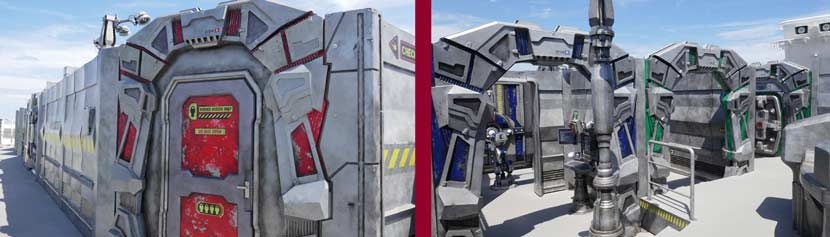
It's a pity that these two new attractions, which take up a significant portion of the decks, are for an extra fee and were built instead of the free attractions and activities found on the Norwegian Escape, Getaway, and Breakaway: the climbing wall and the ropes course (which included a zipline) were canceled, and the mini-golf was greatly reduced. The ship has two innovative and especially cool water slides: the "Ocean Loop," where you slide in a partially transparent slide outside the side of the ship, and the "Aqua Racer," where you slide on single or double inner tubes.

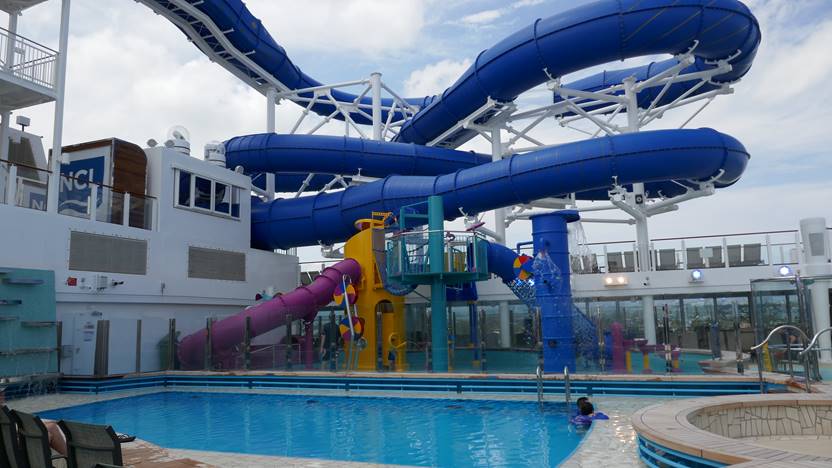
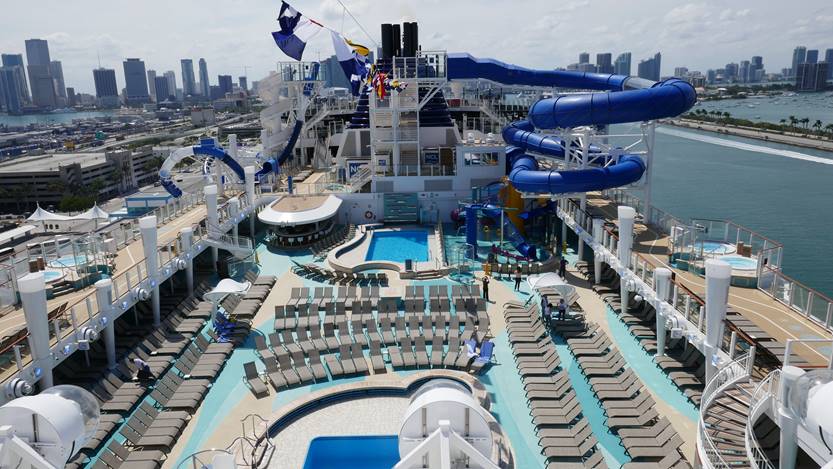
Young children have a cute small water park of their own. Children have modern, well-equipped playrooms, and teenagers are not left out either, with their own unique activity and entertainment room. Even for babies aged six months to two years, a pampering playroom was provided (accompanied by their parents), full of games and facilities. The flagship show of the ship is the musical "Jersey Boys," an elaborate production at a level similar to Broadway.

Another equally recommended musical presented on the ship is "¡Havana!", in addition to many and varied guest performances.

The ship has a comedy club and also a unique club called "The Cavern," where a band performs the songs of the Beatles every evening.

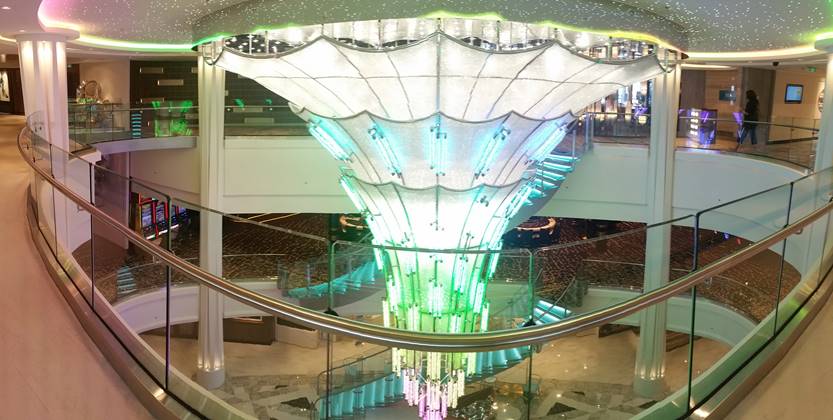
The central space called the "Atrium" on Deck 6 is used for a vast variety of activities throughout the day and night: from language lessons (a nice innovation), to cooking demonstrations, towel folding demonstrations, dance lessons, trivia (including visual trivia), meeting the crew, and a wealth of game shows held there every evening. This is a vibrant and recommended area, but it is usually too crowded, and those who do not arrive well in advance will not find an available chair.
As on all ships from the "Breakaway" series, the Norwegian Bliss has a huge variety of restaurants, including three large complimentary dining rooms: the large Manhattan Room on Deck 7

and the smaller Taste and Savor restaurants on Deck 6, a recommended American diner on Deck 7 called "The Local Bar and Grill" open 24 hours a day, serving rich and fast American breakfasts and typical American food from noon with efficient and fast service (compared to other restaurants). The large and diverse "Garden Cafe" buffet is located on Deck 16, and a smaller buffet is in the Observation Lounge on Deck 15. Additionally, there is a very large variety of restaurants for an extra fee: the innovation on this ship is a Texan BBQ restaurant called: Texas Smokehouse Q, where a country band performs every evening.

Warmly recommended is the Teppanyaki restaurant, a Japanese hibachi restaurant where the chef prepares the meal in front of the diners' eyes with many stunts.

Additionally, there is a Mexican restaurant called "Los Lobos," a French restaurant "Le Bistro," Italian "La Cucina," and of course, you can't go without the (highly popular) Cagney's Steakhouse found on most Norwegian ships.

Most of these restaurants are A la carte, meaning the price is not global but according to the dishes ordered, but most are included in the "Specialty Dining Package," which is one of the worthwhile benefits you can choose when booking the cruise. A particularly recommended restaurant is "Food Republic," an Asian fusion restaurant with a menu presented on iPads where you select and order dishes. The dishes are special and very tasty, but it's worth remembering it is not included in the specialty dining package (which doesn't hinder its popularity at all).

The "Ocean Blue" seafood restaurant is also not included in this package.

It is highly recommended to book reservations for the various restaurants in advance (preferably even before the cruise date), especially for the more popular hours; otherwise, you will be forced to eat at 9:00 PM (and even then you might not find a spot). Most restaurants also have a terrace with tables and chairs where you can eat when the weather is pleasant. It's a shame that the excellent Brazilian restaurant Moderno Churrascaria, loved by meat enthusiasts and present on previous ships in the series (and also on some smaller Norwegian ships), was canceled. On the Norwegian Bliss, there are countless bars on every floor and in every corner—both on the outer decks, on the "The Waterfront" promenade on Deck 8, and of course in all public areas and clubs.
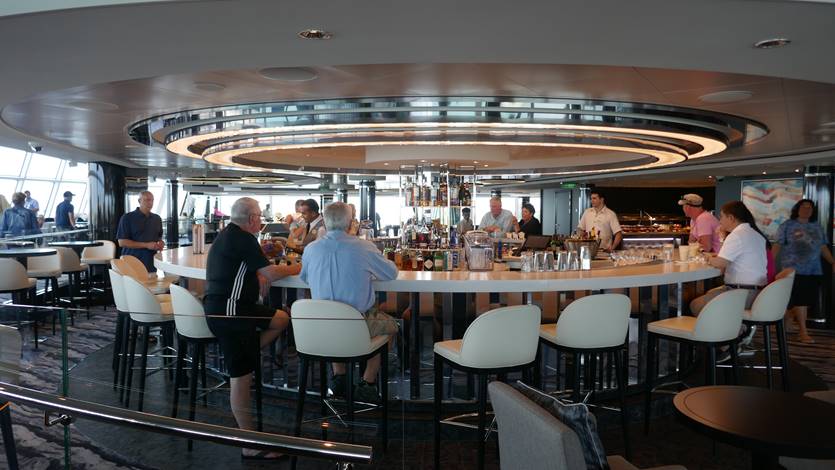
Alcohol lovers will celebrate here, especially if they purchased a beverage package in advance as part of one of the benefits (which requires paying a pre-service charge). Beer lovers will enjoy "The District Brew House" with 50 different draft beers, while wine lovers will be happy to spend time at the fancy "The Cellars Wine Bar" where wine tastings are held several times during the cruise (for an extra fee). On the Norwegian Bliss, special attention was given to suite residents (80 suites of various sizes and styles): they have a large and pampering private deck just for them: The Haven Courtyard Sundeck, which includes private jacuzzis,
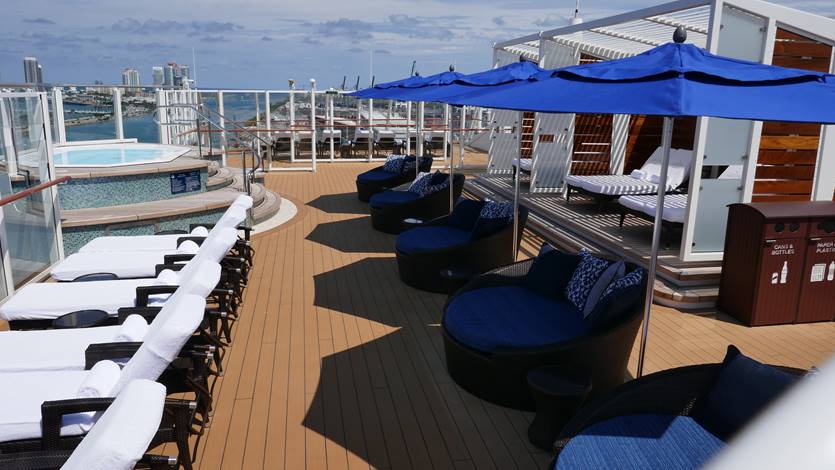
They have a giant lounge with a wonderful view called "Horizon Lounge," restaurants only for Haven guests like "The Haven Restaurant," and more.

Unfortunately, those who cannot afford to live in a suite (the most modest of which costs more than double a regular balcony room) will have to crowd into public decks that have shrunk somewhat due to the increased space for suite residents and the large areas taken up by the Go-Kart and Laser Tag. The ship has a wide selection of suites in different sizes, from mini-suites (which are like a balcony room just slightly larger, without Haven benefits) to villas with two bedrooms and a living room, various types of penthouses, a spa suite, and more. A recommended innovation, unique to Norwegian (we'll see when other companies start imitating it), are the SOLO single rooms, designed for a passenger traveling alone. These are smaller rooms but equipped with everything required. The (interior) rooms have a virtual window from which a sea view is "seen." Solo rooms are concentrated in one area of the ship on Decks 10, 11, and 12, and they have a shared lounge for socializing intended just for them.
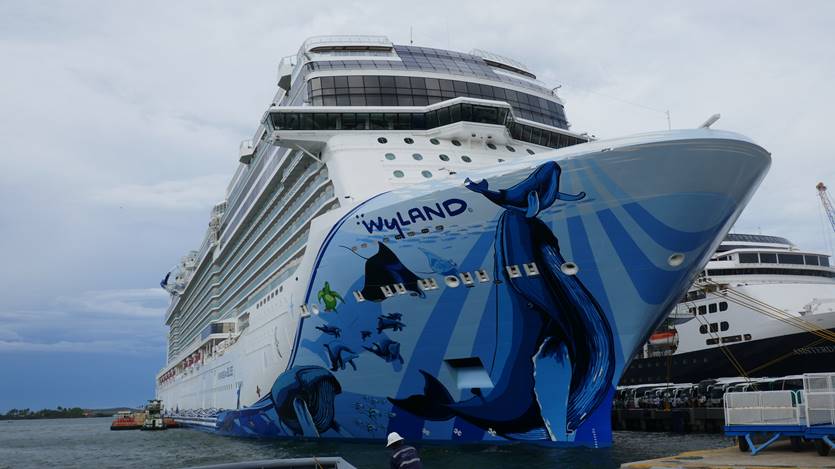
Additionally, the efficient and excellent service to passengers from all ship employees—from the waiters and stewards to the hotel director himself—remains excellent and praiseworthy. Every request and problem were handled quickly and pleasantly. All Norwegian ships are decorated with colorful paintings on the hull. For the Bliss, they chose the artist most identified with sea animals, Wyland, who decorated the ship with his leaping dolphins, rays, and more. There is even a unique TV channel on the ship for Wyland: the Wyland Channel, where you can watch the artist paint dozens of pictures from start to finish with explanations and demonstrations.
The in-room television also serves as a convenient means to book shows, restaurants, and various activities. Additionally, touchscreens are scattered throughout all public areas providing information on various ship activities where bookings can also be made.
Short videos of the innovations, attractions, restaurants, and more on the Norwegian Bliss
The Cruise Itinerary:
The cruise described was 15 days long. Departure port: Miami, and the end port: Los Angeles. For those who can afford a long vacation, this is a wonderful opportunity to combine a prior trip in Florida and a post-cruise trip in California without the need for a domestic flight. The cruise route features five ports in four countries: Colombia, Costa Rica, Guatemala, and Mexico; a highly impressive scenic sailing day, which is the highlight of the cruise through the New Panama Canal, and eight sea days which are excellently distributed: not like a transatlantic or transpacific cruise where there are 5-6 consecutive sea days, but two sea days at the beginning and two at the end, with the rest scattered evenly between ports, allowing for rest and enjoyment of the activity-filled ship while arriving energized at each port to explore it thoroughly. In 2018, which was the ship's launch year, the cruise was held in May, but in subsequent years it has been held in March-April. A reverse cruise from Los Angeles to the East Coast usually takes place at the end of October or early November.
Pre-note:
Three weeks before the cruise date, we received a notification from Norwegian stating there was a change in the cruise itinerary. The change included the cancellation of one of the intended ports in Mexico, the replacement of another port in Mexico, and a date change for yet another port. The explanation for the change was very vague, and when the hotel manager was asked during the cruise about the real reason, he was quite evasive. It is known that changes happen, mostly due to weather issues (which were non-existent during the sailing), but three changes in a cruise with six ports is a very significant change that requires a more serious explanation, especially at the last minute. This resulted in loads and unbearable queues during the first days of the cruise at the "Shore Excursions" desk. Personally, two ports that were completely new to me were canceled, and a destination I had been to many times was added.
Cartagena Port
After two days at sea where we explored every corner of the beautiful ship and its decks, we arrived at the port of Cartagena in Colombia. In my opinion, this is the most beautiful and well-kept port in South and Central America, and perhaps even in the world. It's worth dedicating time to the port itself and its attractions before or after your tour.
Book recommended tours in Cartagena from Viator:
Passing Through the Panama Canal
The next day is the most impressive and amazing day of the cruise: the day of the transit through the wider, new Panama Canal, known as: ampliación del Canal de Panamá (Panama Canal Expansion project).
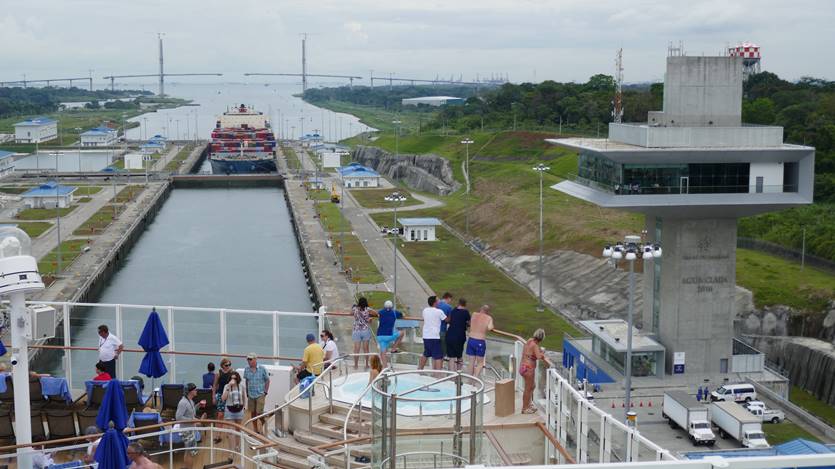
Until the end of 2016, large new cruise ships could not sail through the Panama Canal because it was too narrow for them. But after years of building the expansion, today most large ships can pass through (except for the Oasis class of Royal Caribbean, whose ships, the largest in the world, are still too wide). The width of the new canal is 55 meters (compared to 33.5 meters in the previous canal, which is still active). The depth of the new canal was also significantly increased: 18.3 meters (compared to 12.8 meters in the old canal). Today there are actually three sets of "locks": two of the old canal, narrower, operating on an older and much less ecological method with locomotives towing the ships, and the third modern set without locomotives but with tugboats, one before the ship and one after.

Norwegian Bliss was the largest passenger ship to pass through the new canal. During its construction, the specifications of the new canal were taken into account to build it to the maximum possible capacity. The Panama Canal, which is about 77 km long, consists of two sets of "locks"—sailing chambers—with a large lake between them, connecting the Atlantic Ocean in the east to the Pacific Ocean in the west. Passing through it saves ships a long and prolonged voyage around all of South America. This is a saving of over 12,000 kilometers! The entry and exit of the ship from the locks are very impressive because the gap between the ship's sides and the lock walls is extremely narrow, and the entire process of filling the locks with water and raising the ship in a series of "steps" is unique and fascinating.

After the series of locks on the Atlantic side and sailing under a massive bridge that looks as if it almost touches the giant ship, the ship sails in a man-made lake called "Gatun Lake," bustling with ships and vessels of all types and sizes. The scenery during the sail in the lake is tropical with plenty of trees and bushes, and you even pass a prison along the way. Towards the end of the canal, the skyscrapers of Panama City are seen in the distance.
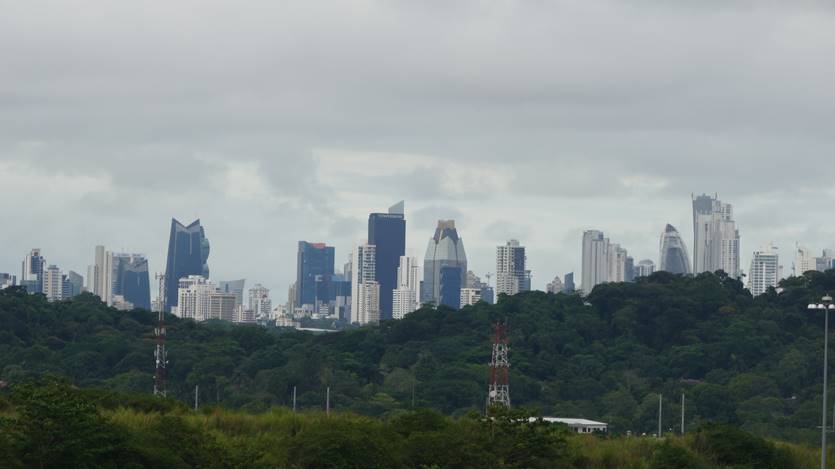
Upon finishing the sail in the lake, you reach another series of locks and pass under another bridge called: the "Bridge of the Americas." Adjacent to the locks are visitor centers from which tourists in Panama can marvel at the technological wonder. As the ship passes, especially a passenger ship so beautiful and impressive, all the visitors wave excitedly, and the ship's passengers wave back. It is all accompanied by shouts and cheers. It is a unique experience like no other on cruises to other destinations in the world. The transit through the canal lasts from morning until evening. From the start of the transit until its end, explanations are broadcast over loudspeakers on the outer decks for every stage, with descriptions of what you see along the way, and even in the middle of the lock transit, local dancers and singers in characteristic costumes board the ship's deck and perform a dance while waving flags. The transit can be observed from any balcony or deck, but for this day only, a one-time visit is allowed to the very forward deck at the bow of the ship where chairs are arranged and soft and hot drinks are provided. Of course, the observation deck on the 15th floor is particularly popular on this day and very crowded.
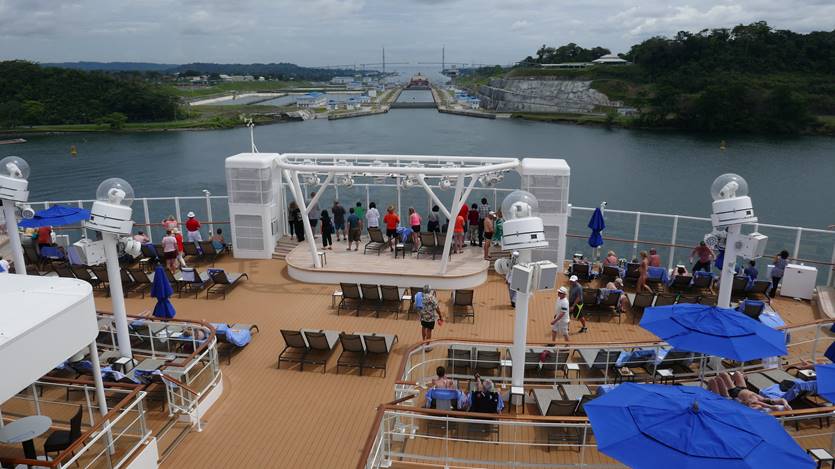
Stations for water, juice, coffee, and tea are scattered along the Deck 8 Waterfront promenade (adjacent to the many restaurant and bar terraces on this floor). Everything is very organized, and passengers are taken care of both for hydration in the tropical heat and for information, explanations, and entertainment. This is a day that anyone who experiences it will never forget—a technological wonder accompanied by impressive views and plenty of treats.
♦ Puerto Caldera Port in Costa Rica
After another relaxing day at sea, the ship arrives at Puerto Caldera in Costa Rica. In fact, it arrives at the "Puntarenas" port which is a giant and unpleasant commercial port located about a half-hour drive (20 km) from the city of Puerto Caldera on the Pacific side of Costa Rica. This is a port where it is highly recommended to take a guided tour because it is very inconvenient to manage independently. You do not, of course, have to take the expensive ship tours.
Book recommended tours in Puntarenas from Viator:
A recommended local company with attractive prices is: Tiquicia Tours It's worth joining their tour called: "Monkeys and Crocodiles" tour, which includes a visit to a grove where you will meet "White-faced Capuchin" monkeys up close,
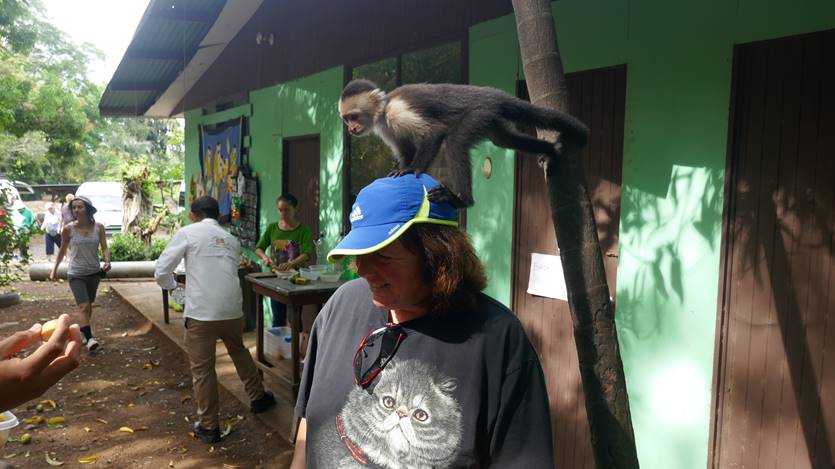
From there you continue through rainforests to villages and plantations full of tropical fruits, including stalls where you can taste and buy exotic fruits. From there you continue to a "Crocodile Safari" including a boat trip on the Tarcoles River where you will see many crocodiles of all sizes around you and also a vast variety of birds including giant and colorful Macaw parrots.


You will also stop at several impressive viewpoints over the forests and the sea.

The tour ends with a short visit to the city of Puerto Caldera, its pedestrian mall, and its lighthouse view.
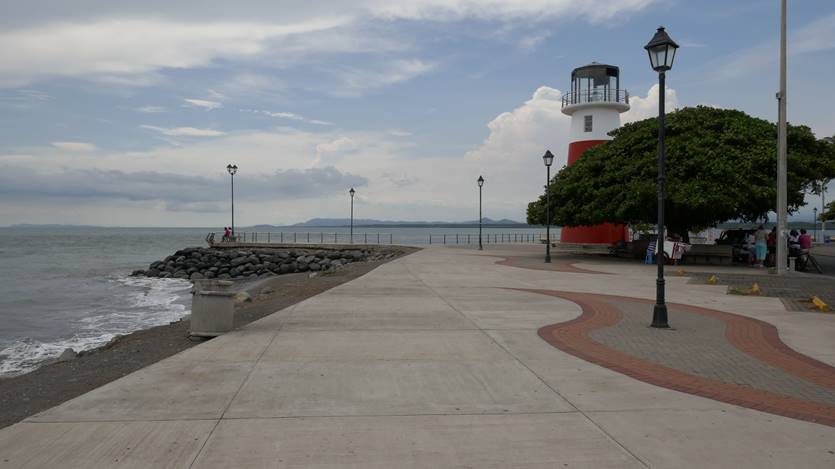
This is an underwhelming city and it's definitely enough to peak at it quickly; it's really not recommended to dedicate the whole day to it as many ship passengers do. Those who love action can combine ziplining between treetops, one of the most popular activities in Costa Rica. The tour lasts between 4 to 5.5 hours.
♦ Puerto Quetzal, the main port of Guatemala
After another day of leisure on the ship and its facilities at sea, the ship arrives at Puerto Quetzal, the main port of Guatemala. This is an industrial port city and not touristy at all, so there is no reason or taste to stay there. The city is located only a 1:40 hour drive from Antigua, the former capital of Guatemala and one of the most beautiful and touristy cities there. Antigua has been declared a UNESCO World Heritage Site.
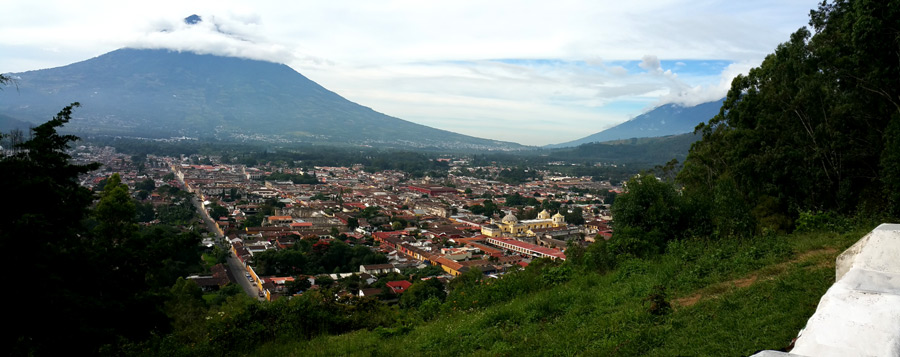
It is recommended to take a day trip guided in the beautiful colonial city.
♦ Recommended guided tours to Antigua at a significantly lower price than the ship's tours can be booked on the "Viator" website:
Those who have already toured Antigua in the past and are interested in a relatively short and focused tour can join a ship tour to a macadamia nut farm called Valhalla Macadamia Farm & Restaurant, website: http://valhallamacfarm.com/ It is located south of Antigua, about a 1:20 hour drive from the port. The tour includes a walk among macadamia trees, explanations of the unique and nutritionally valuable nut, demonstrations of how the nuts are separated by size and especially how they are cracked, nut tastings, and trying various products made from the nut (mainly various cosmetic products).

The tour also includes lunch. The place is very pastoral and visionary. The tour includes a lunch based on the farm's produce.
After two more sea days on the ship, we reach the final country visited on this trip before returning to the USA: Mexico. Arrival at two ports on the west coast of Mexico: Puerto Vallarta and Mazatlan to its north. It's important to emphasize that the beaches in western Mexico, on the Pacific side, are much less attractive than on the Caribbean side (Cancun, Cozumel, Playa del Carmen, etc.), so it's not worth dedicating your whole stay in these destinations to beach activities. Those who want to refresh themselves with a dip can do so after touring the touristy cities which also have character and culture. In these two cities, a recommended, efficient, and cheap way to experience the city and all its sites and learn much about it is via a bicycle tour.
♦ Puerto Vallarta
Puerto Vallarta lies in Banderas Bay, the largest bay in Mexico. it is considered one of the most popular resort cities in western Mexico. The city has many good restaurants, bars, cafes, and is full of shopping centers. The city, like many coastal cities in Mexico, has a long promenade along the beach called "The Malecon."

Adjacent to the port is a large and colorful market which also has a large selection of typical Mexican souvenirs and of course clothes and other accessories. Adjacent to the port within minutes' walk is a long but underwhelming beach. Those who prefer a quieter and higher quality beach will need to drive south of the Malecon to the area of the large resorts. Each resort has a private beach for its guests, but you can find several more sympathetic beaches between them intended for everyone.
♦ Book recommended tours in Puerto Vallarta from Viator:
Tailored for cruise passengers, port pickup


In Puerto Vallarta, it's recommended to take a bicycle tour with the Xiutla Riders company, located about a fifteen-minute drive south of the city's cruise port. The tour, which lasts about two and a half hours, goes along the entire Malecon promenade, which is full of beautiful large statues and designed benches. You visit the pier and the historical lighthouse. From there, you continue to the "island" connecting the promenade with the Old City, an area full of tropical vegetation, many iguanas in the trees, interesting buildings, and plenty of shops and stalls, and then continue to the Old City through shops, alleys, and of course churches until returning to the starting point near the promenade. Cap off the tour with quality ice cream from an old Mexican recipe. The company also specializes in private ATV tours and surfing/SUP lessons.

Mazatlan
The next morning, we reach the final port of the cruise: the port of Mazatlan. Mazatlan is divided into two areas: the Old City (Centro Histórico) and the Golden Zone (Zona Dorada) where most hotels/resorts, beaches, restaurants, and entertainment venues for day and night are located. In the Old City (Centro Histórico), you can find 19th-century buildings as well as cultural and historical sites. Along the local promenade are various strange statues, and from the observation tower at its end, daring locals jump into the rock-filled sea (and then collect tips from the tourists who watched them). Along the beaches throughout the city and its suburbs is a long promenade—the Malecon at 21 km, considered the longest in the world.
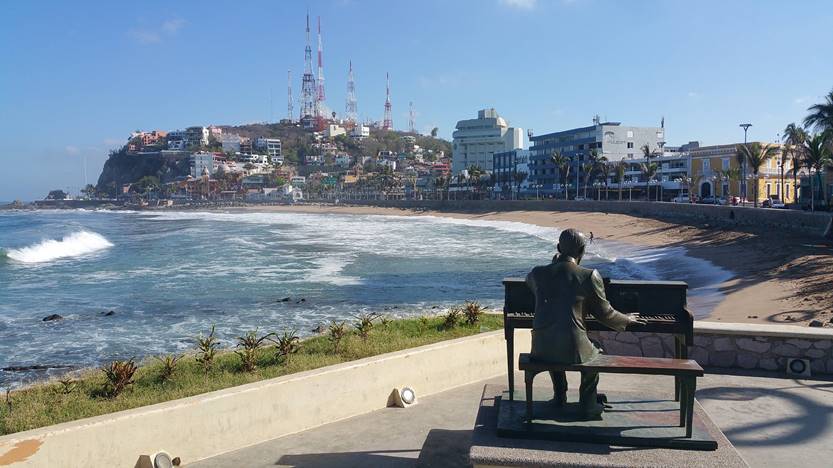
In Mazatlan, I recommend the bicycle tour of the Blue Foot company (website: http://bluefoot.mx/). The tour duration is about 3.5 hours (of which an hour and a half is actual cycling). The guide will pick you up from the port gate. While waiting for him, you can stroll among the many shops and stalls located at the port selling typical souvenirs, bags, hats, fashion products, food, and typical alcoholic beverages.
The tour begins with a ride along the Malecon with lovely views of islands and islets, surfing beaches, and swimming beaches, including the popular Playa Olas Altas.
You will watch the daring cliff jumpers and pass by the fishing harbor, bustling with fishermen and their wares.

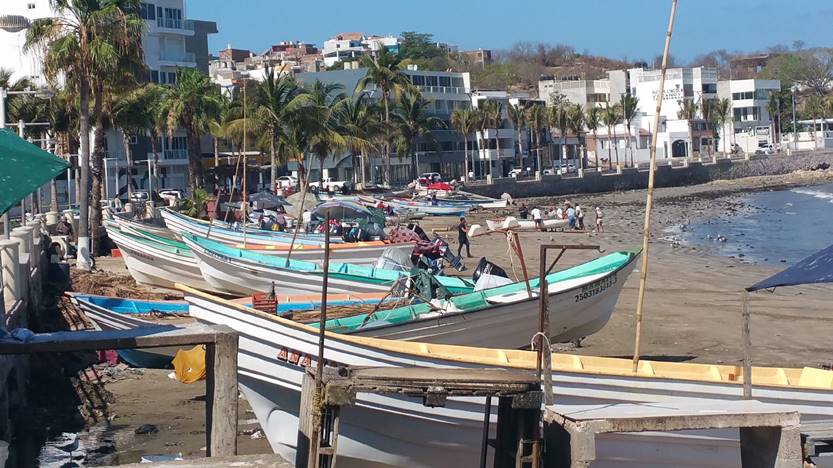
Then you visit an abandoned fortress overlooking dramatic scenery and also a large and vibrant market called "Mercado Pino Suarez."
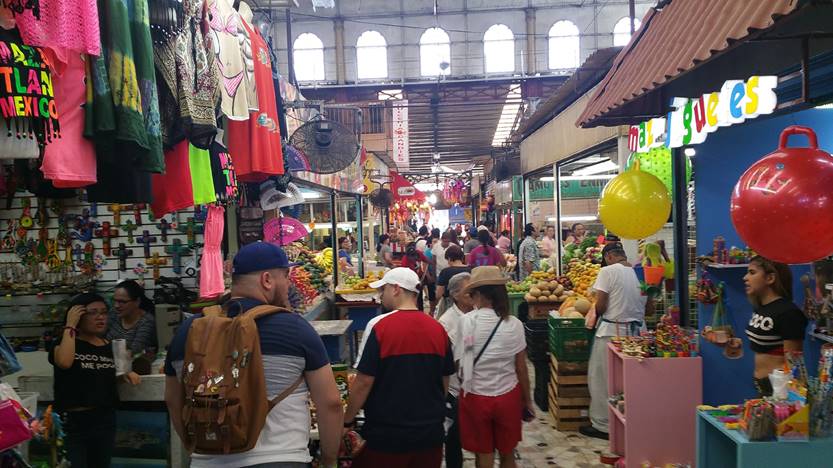
Including tastings of typical foods, you visit the central plaza of the Old City bustling with pigeons and vendors, the Mazatlan Cathedral, and its impressive theater, Teatro Angela Peralta.
