The Travel Guide to Porto - Portugal
Porto, Portugal's second largest city, is a major Atlantic port city.
In Portuguese, the city is called O Porto, which means "The Port".
The Bridges of Porto
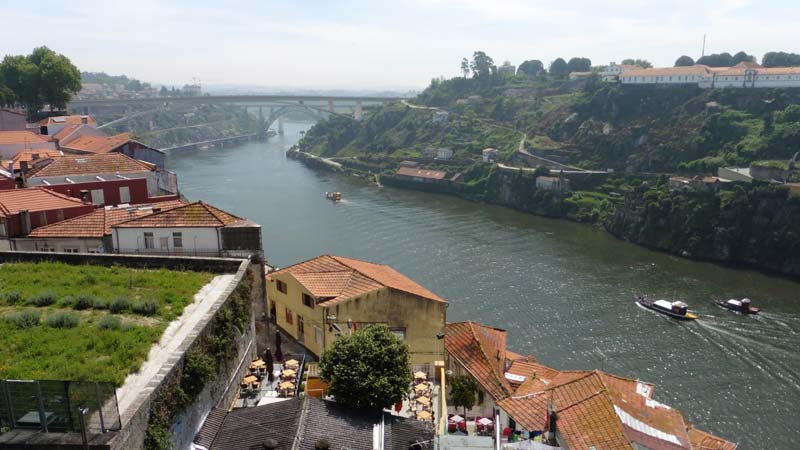
The city is located in northwestern Portugal, along the Douro River, which flows into the Atlantic Ocean at its edge (and at the city's edge). Six bridges connect the two banks of the river, several of which are impressive and famous, each built in a different style. The two most impressive of them all are: the Dom Luís I Bridge (Ponte de Dom Luís I), a double-deck bridge measuring 385 meters in length, inaugurated in 1886 and considered at the time the "longest iron bridge in the world".

The most famous bridge of all, inaugurated as early as 1877, is the Maria Pia Bridge. It was designed by the French engineer Gustave Eiffel, who only twenty years later designed and erected the Eiffel Tower. This bridge was Eiffel's last project before building the world-famous tower in Paris.
It is lovely to cruise along the Douro River on one of the river boats that sail between its bridges. The duration of the sightseeing cruise is about an hour to an hour and a half, and it is especially recommended in the evening hours.
♦ Recommended Hotels in Porto:
Ribeira do Porto Hotel
A 3-star hotel in the heart of the touristy Ribeira district, right next to the Douro River.
NH Collection Porto Batalha
A modern 4-star hotel in a central location in the heart of the city, close to leading tourist attractions.
HF Ipanema Park
A modern 5-star hotel at an attractive price, located about a ten-minute drive from the city center.
Bnapartments Ribeira
An apartment hotel suited for 4-6 people, located in the heart of Porto's historic tourist area near the Douro River.
Guided Tours:
It is recommended to take a guided tour through the city's alleyways. During the walking tour, you will learn a great deal not only about the city's past, but also about life there today and its culture, alongside tastings of local food and famous regional wines.

Sample traditional Portuguese pastries—both savory and sweet—quench your thirst with local beer, and discover remarkable, less touristy viewpoints known primarily to locals.
Recommended Guided Tours to Explore the City of Porto:
Recommended Guided Food Tour in Porto
My favorite food tour company is Secret Food Tours, which runs tours in numerous destinations worldwide. In addition to high-quality, authentic food at spots where locals eat, their tours also include wine, beer, and spirits that pair perfectly with each dish. You will learn about the local cuisine and culture while touring landmark destinations and discovering bits of history and art along the way.
So when I discovered that Secret Food Tours operates in Porto, I immediately booked our spots (six months in advance...).
To book the Porto tour on Viator: Porto Walking Food Tour With Secret Food Tours
And indeed, I was not disappointed. As always: a knowledgeable guide with clear, excellent English, a small group, and authentic food unique to Porto (there is intense competition between Porto and Lisbon over food and drinks, with each region boasting distinct dishes). We started with coffee and cake in a lovely cafe (across from the famous cafe where J.K. Rowling often sat while writing the first Harry Potter book), and continued to the wonderful Bolhão Market, recently restored through significant investment (we returned the next day to shop for fruit and food), where we tasted sardines, preserved cod, and "green" wine (Vinho Verde).

We continued with the city's most popular sandwich—Bifanas—at a restaurant where it is practically the only main dish served, followed by Porto's signature dish: Francesinha, paired with the most popular local beer: Super Bock. It was incredible to see how every single patron in the restaurant (which was completely packed) was eating the exact same dish and drinking the exact same beer. From there, we moved on to a Port wine tasting in a large wine shop. Three and a half hours during which we also saw the famous train station, the main shopping street, pedestrian malls, City Hall, and picturesque plazas and alleyways, learning so much (all on a full stomach).

Vila Nova de Gaia
The town across the Douro River is called Vila Nova de Gaia, and it is where the famous Port wine cellars are concentrated. This world-renowned wine, named after the city, is Porto's number-one export product.
|
Did You Know? Port Wine: Port wine was invented in the 17th century when a war broke out between England and France, causing a shortage of Bordeaux wine in England. The English, whose climate was unsuitable for developing a winemaking industry, decided to produce an alternative wine in Portugal, which was an ally of England. They established wine houses along the Douro River. To preserve the wine during the journey to England, they added a small amount of brandy into the casks during fermentation. This stopped the fermentation process before the yeasts finished breaking down the sugars, leaving residual sugar in the wine. That is why the resulting wine is sweet with an alcohol content higher than average, around 20 percent. Port wine is a blend of several harvest years, which is why a vintage year is not stated on the bottle, except in particularly outstanding years when the harvest year is declared and the wine is labeled Vintage Port.
|

Ribeira District
Porto's most vibrant and touristy quarter, the Ribeira district, borders the Douro River on one side and the Old Town on the other. Ever since its founding in the 12th century, it served as a social and economic gathering place thanks to its strategic riverside location along a primary transport artery.
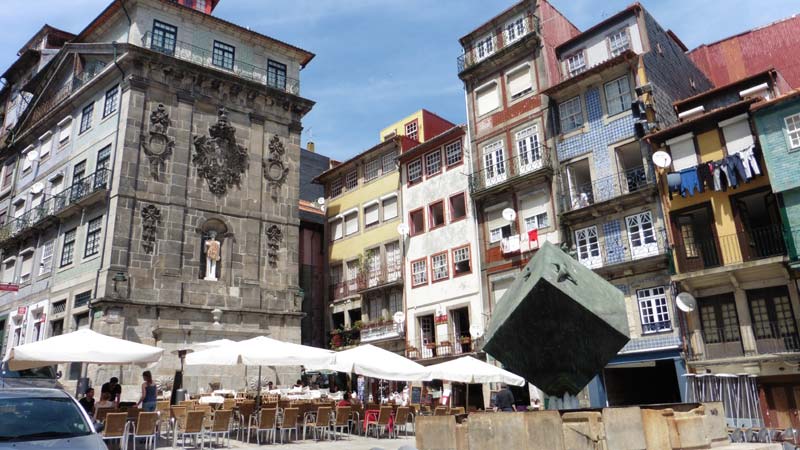
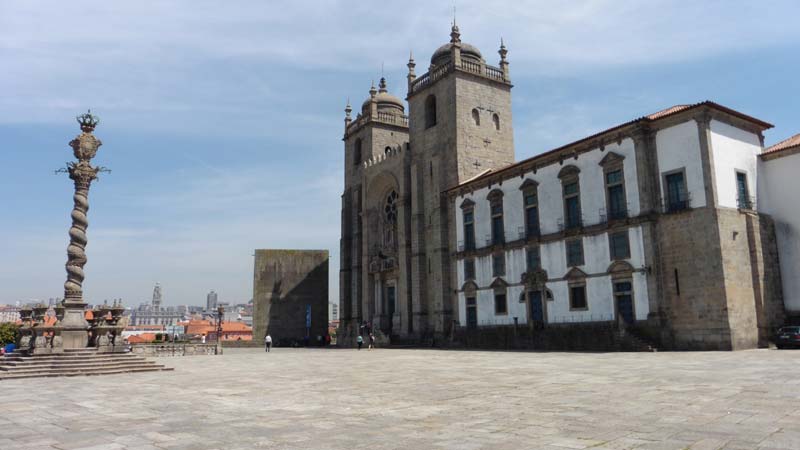
In 1491, a major fire broke out in the area, destroying large portions of the district, which took many years to rebuild and rehabilitate. The district is home to Porto's two famous cathedrals: the Porto Cathedral (Sé do Porto), built in a 12th-century Gothic style, and the Church of Saint Francis (Igreja de São Francisco), considered one of the most impressive in Europe, with an interior coated in pure gold.
Yet the city's most magnificent and impressive building is actually the former Stock Exchange Palace, Palácio da Bolsa—a two-story building featuring painted ceilings, intricate wood carvings, and an exceptionally lavish Moorish-style Arabian Hall.
Another striking structure is "Casa da Música", a 12-story concert hall renowned for its distinctive architectural design.
Porto's historic center, considered one of the oldest in Europe, was designated a UNESCO World Heritage site in 1996 for its remarkable historic buildings and monuments.
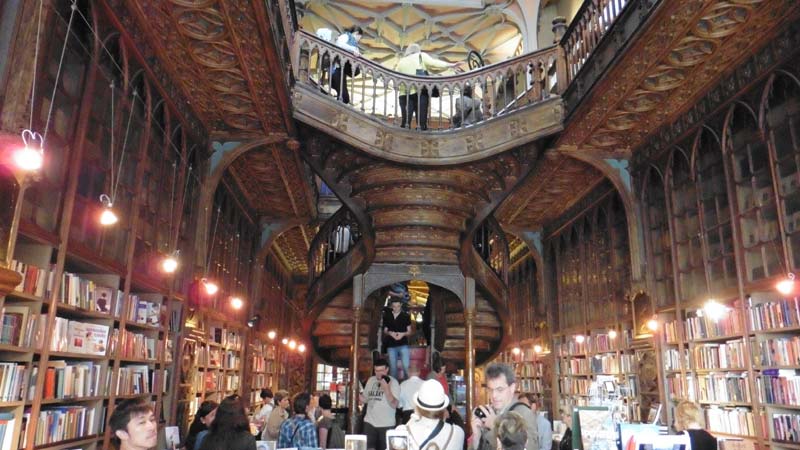
In Porto you will also find the most beautiful bookstore in the world: "Livraria Lello", which is also among the oldest in Portugal. The shop features an extraordinary spiral staircase and colorful stained glass beneath high ceilings decorated with carved wood.
The most beautiful train station in the world—São Bento Station—was built on the ruins of a monastery in the early 20th century. Its walls are adorned with ceramic tile murals (azulejos) depicting pivotal moments in Portugal's history (even the McDonald's next to the station features impressive decor with high ceilings and chandeliers).

And one of the most beautiful cafes in the world—Majestic Café—is designed in Art Nouveau style and has long been a popular gathering spot for intellectuals, artists, and politicians alike.
(All of these have earned their respective titles from various travel outlets and international magazines).
|
Did You Know? ... J.K. Rowling, author of the "Harry Potter" series who lived in Porto in 1993 (working there as an English teacher), shared in an interview that she drew inspiration for Hogwarts Library from Livraria Lello. Rumor has it that she began writing the first book in the series right in Porto at the Majestic Café, which is why locals proudly claim that Harry Potter was actually born in Porto.
|
Baixa District
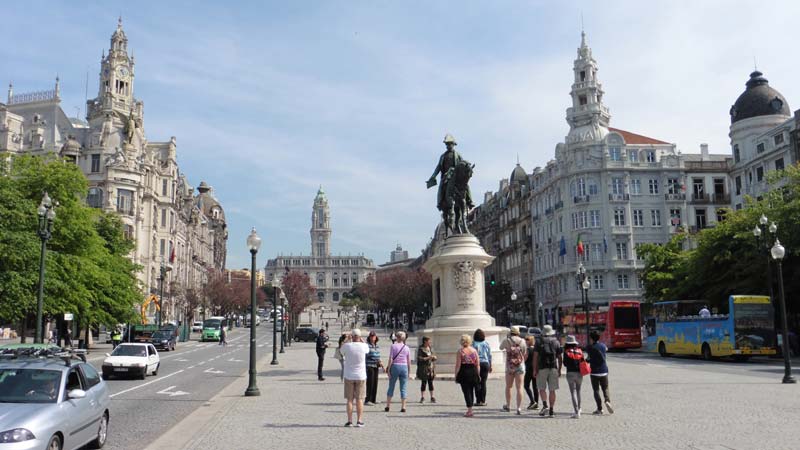
The Baixa district is Porto's bustling commercial core. Stretching through it is the city's most renowned boulevard, Avenida dos Aliados, where the City Hall stands with its 70-meter-high bell tower. Also located in this district is the prominent Liberty Square (Praça da Liberdade), featuring a central equestrian statue of King Pedro IV. The square is lively with street performers and bordered by cafes, shops, and hotels.
♦ Car rental via reliable and convenient Booking.com: Booking.com
Scenic Viewpoints
One fantastic panoramic view of the city can be enjoyed from the iconic tower considered a symbol of the city: Torre dos Clérigos, a Baroque bell tower looking out over Porto and the river.
Another rewarding vantage point over the river is from the lovely gardens of the Crystal Palace (Jardins do Palácio de Cristal). Within the gardens sits a 19th-century estate that houses the Museum of Romanticism.

Additional Great Sights:
Porto features a colorful city market called "Mercado do Bolhão".
Another modern market is Bom Sucesso Market (Mercado Bom Sucesso), specializing in an array of gourmet food stalls.

Kosher-observant travelers will be pleased to know that right nearby is a kosher hotel called "Hotel da Música".
Art enthusiasts should not miss Rua Miguel Bombarda, lined with contemporary art galleries.
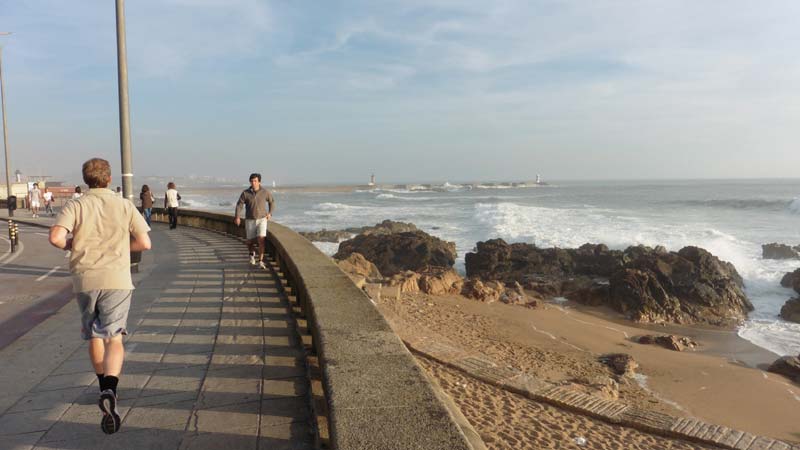
It is well worth venturing beyond the city center out to the river mouth at Foz do Douro, where Atlantic waves crash against the jetty. The river mouth features a historic fortress, leading into a long coastal promenade dotted with seaside cafes and restaurants, bustling with cyclists and runners.
Porto is also celebrated for its lively nightlife, particularly along Rua Cândido dos Reis and Rua Conde de Vizela, which are filled with bars and clubs.
Jews in Porto
A thriving Jewish community once flourished in Porto before being nearly wiped out during the Inquisition. Today, the Kadoorie Synagogue (Sinagoga Kadoorie) remains active, serving the small Jewish community currently residing in the city.
It is fascinating to take a guided tour through the streets of Porto's Old Jewish Quarter to learn about the changing status of local Jews over the centuries and the history of their community.
To book on Viator:
♦ 3-Hour Jewish Heritage Tour in Porto
- 3Hour Porto Jewish Heritage Walking Tour with Local Guide
Transportation
Porto is located roughly 320 km from Lisbon, about a 3-hour drive. The two cities are connected by excellent highways, trains, and buses.
Porto has an international airport, Francisco Sá Carneiro Airport, serviced by direct flights from all across Europe—including an increasing number of low-cost carriers—as well as domestic flights from Portuguese destinations, including Madeira.
Public transit in Porto is convenient and inexpensive. The city is well covered by metro lines and bus routes. Taxis and ride-shares are readily available and affordable, so even if you arrive with a rental car, it is best left parked at your hotel while you explore using public transit or, best of all, on foot (parking in the center is neither easy nor cheap).
|
Did You Know? Porto's quintessential dish, served in almost every local restaurant and casual eatery, is the "Francesinha"—a layered sandwich loaded with various meats, blanketed in melted cheese, and smothered in a rich beer and tomato sauce. It is almost invariably accompanied by french fries.
|
Peneda-Gerês National Park
Portugal has a single national park: Peneda-Gerês National Park, located in the north along the Spanish border. It is situated just about an hour and fifteen minutes from Porto, making it an ideal nature day trip for visitors to the city. The park offers numerous trails among waterfalls, rivers, and forests, as well as several lakes and traditional villages within its bounds.

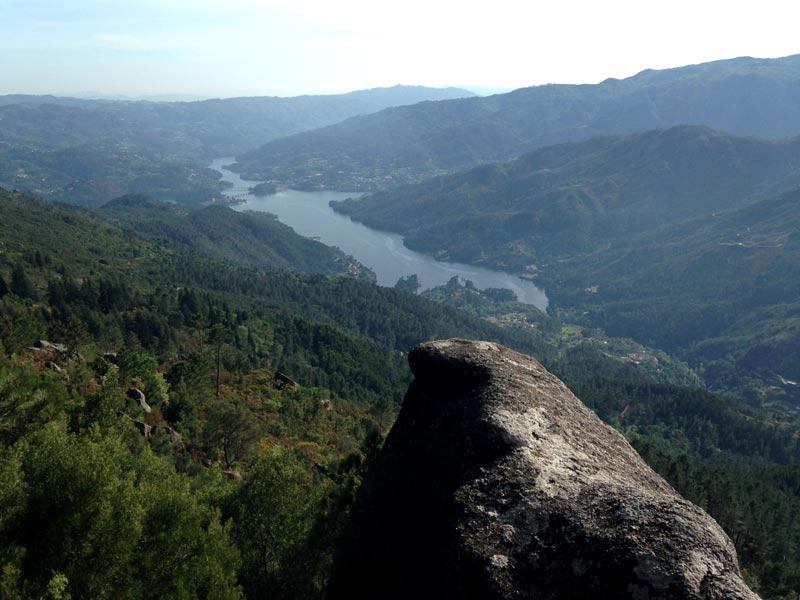
You can certainly explore it independently, but if you are looking for a fulfilling day visiting hidden gems along trails known only to locals—combining hiking, viewpoints, and swimming with insights into the local culture, village life, and especially the park's native flora and fauna—it is highly recommended to join a full-day 4x4 tour by Oporto Adventure Tours. The tour includes 4WD driving to and through the park, hikes to secluded corners, swimming under waterfalls, and visiting the "Blue Lagoon" (a turquoise natural pool where you can cliff-jump from tall rocks, for the brave and cold-tolerant), plus numerous panoramic views, including the breathtaking "Pedra Bela" lookout from the mountaintop down over the lake and valleys far below.
♦ Book this company's tour on Viator:
Waterfall, Lagoon and Old Village in Peneda-Gerês National Park

During the tour, you will visit a traditional village home nestled in the heart of the park where time seems to have stood still. You will bake local cornbread and rice bread and enjoy fresh homemade soup prepared by a village resident. The tour includes lunch at a wonderful park restaurant featuring scenic views—an exceptional, comprehensive day out for fans of nature, landscapes, and adventure.