Travel and Vacation on St. Lucia Island
♦ Routes (free): Detailed travel itineraries in USA
General Information
St. Lucia (pronounced: Loo-Sha) is a lush, wild tropical island considered one of the most picturesque in the Caribbean.
The landscapes on the island change dramatically from white sandy beaches to dense rainforests, from towering mountains and a dormant volcano to plantations, farms, and tiny fishing villages.
The entire interior of the island consists of high volcanic mountains rich in vegetation. One of the island's most prominent landmarks, considered its symbol, is the pair of green hills that descend steeply into the sea, called "Pitons," which rise to a height of almost 800 meters above sea level.
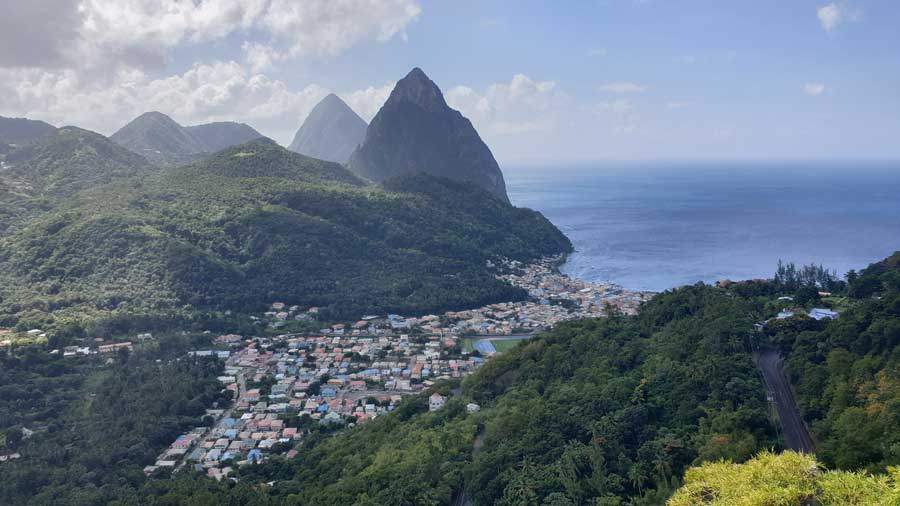
These hills abound with rich tropical vegetation including wild orchids, giant ferns, and birds of paradise. It is also home to rare tropical birds, including endangered species.
The highest point on the island is Mount Gimie, which stands 950 meters high.
The island also has many plantations of bananas, coconut trees, mangoes, papayas, and sugar cane. The mineral-rich and fertile soil has made the island one of the leading exporters of bananas in the Caribbean, with six different varieties!
St. Lucia's natural beauty resembles the magical islands of the South Pacific more than its neighboring Caribbean islands. The island is a paradise for nature lovers, offering plenty of hiking opportunities at all difficulty levels. Diving and snorkeling enthusiasts will also find reefs and coral gardens teeming with colorful fish.
It is a relatively small island, with an area of 616 sq km, 43 km long and 22 km wide (at its widest point), resembling an avocado or a mango in shape (depending on the viewer's taste...). The total length of the coastline is 158 km.
Location and Climate
The island is located in the Windward Islands chain between Martinique and St. Vincent (just 38 km north of St. Vincent) and 160 km northwest of Barbados. The island is located 2080 km southeast of Florida at a latitude between 13° and 14° North. The Atlantic Ocean lies to its east and the Caribbean Sea to its west.
The climate is subtropical, but the northeast trade winds have a moderating effect on the weather. Temperatures are comfortable year-round, ranging from 26-32 degrees Celsius, with only slight variations between summer and winter. In the hottest months, June to August, the temperature may climb to 35 degrees at midday. Two main seasons are distinguished: the dry season from November to April and the wet season from May to October. The average annual rainfall is about 1500 mm in the coastal area and about 4000 mm in the mountain area.
The currency on the island is the East Caribbean dollar (code: XCD), but the US dollar is very common, as is the use of credit cards. One US dollar is worth about 2.6-2.7 East Caribbean dollars.
The time zone in St. Lucia is Atlantic Standard Time (AST), which is one hour ahead of US Eastern Standard Time.
Unlike the US, the electricity is 220 volts.
Cable and Wireless LTD provides excellent communication services including direct-dial international calls and internet services.
Tap water in St. Lucia comes from natural springs and is clean and safe to drink.
♦ Main Attractions on the Island
St. Lucia is full of attractions, ranging from spectacular nature sites and historical landmarks to colorful cities, picturesque fishing villages, farms, plantations, and, of course, wonderful beaches.
Tours to book from GetYourGuide.com:
Tours and excursions tailored for cruise ship passengers from Viator:
Castries:
Castries is the capital of the island. It is the largest city on the island and home to the main port where all cruise ships arrive. It is one of the most modern capitals in the Caribbean, as most of its buildings are made of glass, concrete, and steel because four fires that raged between 1948 and 1976 destroyed almost all the original structures from the British and French colonial periods. Nevertheless, original historical structures can still be found. The old center of the city, Derek Walcott Square, is a good example. The picturesque square is named after the 1992 Nobel laureate in literature, who was a native of St. Lucia. The square is lush with vegetation, including a large and ancient 400-year-old tree. On one side of the square is a church from 1897 called the Cathedral of the Immaculate Conception, while on the other side is the National Library building, an impressive structure housing collections of ancient maps of the Caribbean. In the southern part of the square are several well-preserved wooden buildings. The main and liveliest street in the city is William Peter Boulevard, which is full of shops of all kinds.
A visit to the Castries Central Market is a must. It is open daily except Sundays, but the liveliest days are Fridays and especially Saturday mornings. This market is considered one of the most colorful in the Caribbean and is a great place to observe the local residents, their colorful dress, and get a glimpse of their culture.
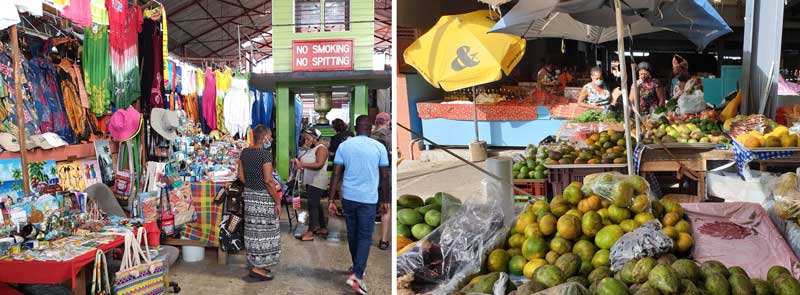
The market is located a block away from Derek Walcott Square, near the port dock. The variety of tropical fruits sold in the market is very impressive, including many varieties you likely haven't seen before. The place is a wonderful mixture of colors, smells, and tastes. In addition to fruits and vegetables, the market also has stalls for baskets, pottery, and typical local handicrafts.
Did you know? By the number of knots in the colorful cotton headscarves worn by the women of St. Lucia, you can tell whether they are married, divorced, or single. The locals will be happy to give you explanations on the subject.
In the south of the city rises a hill called Morne Fortune, which means "Hill of Good Fortune." The fortune of many people there was actually quite bad because this hill was one of the places that saw the hardest battles in the Caribbean when the British and French fought each other for control. The French began building the fort in the mid-18th century, but its construction was continued by the British only after the French surrender in 1796 and lasted until 1905. Today there is a small museum describing that period and a military cemetery, as well as remnants of many fortifications and cannons. Many of the military buildings on site were restored and became a college. The Governor's House is also located on this hill and serves as a wonderful example of original Victorian architecture.
Even for those not interested in historical and military structures, it is highly recommended to visit the site. Many claim that the panoramic view from the hill is the most beautiful in all the Caribbean. From the hill, as well as from the road winding to its top, you can see the city, the port, Pigeon Island, and the northern part of St. Lucia, and on clear days, you can even see the neighboring island of Martinique.
Near Castries is the largest farm in St. Lucia:
Marquis Estate. You can take a guided tour of the plantations and see the cultivation and processing methods for bananas and other crops, as well as learn about cocoa and coffee production methods in years past. The tour includes a scenic drive along the northeast coast of the island, a visit to an ancient sugar mill, a boat trip on the Marquis River, and lunch at the manor house. Tours must be arranged in advance by phone: 758-452-3762.
As you continue driving south, you reach the Cul De Sac valley, which has vast areas of banana plantations. If you are traveling by taxi, ask the driver to stop at one of the plantations. After a few more kilometers (a total of 13 km from Castries), you reach Marigot Bay, which is one of the most beautiful and protected boat anchorages in the Caribbean. The narrow and picturesque bay, popular among yacht owners, is located at the foot of a steep hill lined with palm trees. It is considered one of the most beautiful places on the island. It has a recommended swimming beach (detailed in the "Beaches" section below) and several hidden hotels that blend well into the landscape. Legend says that this is where British Admiral Rodney outsmarted the French by covering his ship with palm branches and lurking for them on the shore. Between the two sides of the bay (the marina area and the swimming beach) there is a ferry that operates 24 hours a day. The ride takes only about two minutes and is completely free of charge.
South of Marigot Bay are more banana plantations called:
Roseau Banana Fields, followed by two picturesque fishing villages:
Anse La Raye and Canaries, each located in a small bay at the foot of a steep hill. A visit to these tiny villages illustrates the traditional fishing methods using dugout canoes, which are still used in these villages today.
Attractions north of Castries: North of Castries are many tourist attractions including wonderful swimming beaches, bays dotted with towns, historical sites, and a national park. The busiest tourist area is Rodney Bay, which is full of hotels and resorts and is located about a fifteen-minute drive from the capital. The bay has a swimming beach considered one of the best on the island (detailed in the "Beaches" section below), a marina crowded with yachts, restaurants, and plenty of sports, leisure, and active nightlife options. From the marina, many tours depart on pleasure boats for excursions along the west coast of St. Lucia. Every hour, a ferry crosses the bay between the marina and the shopping center.
North of the marina lies a fishing village called Gros Islet, which holds a huge dance party every Friday night called: Friday Night Jump-Up. The entire village turns into a colorful carnival and attracts crowds of locals and tourists to dance in the streets.
"Pigeon Island"
This is the first national park of St. Lucia. It is located on a small island connected to the mainland by a low causeway. The island is named after the red-necked pigeons that nested there in the distant past. The park has hiking trails that pass through historical sites such as the ruins of a fort built by the British in the 18th century, remains of ammunition stores, and fortifications. The park has a visitor center and museum (Phone: 758-450-0603) with exhibits and a multimedia display describing the local history of the area from the days of the first settlers to the British and French wars on the site. The most important display deals with the battle in 1782 where British Admiral Rodney defeated French Admiral "de Grasse" in a battle known as "The Battle of the Saintes." This battle marks the end of French control of the island. The visitor center is located in a restored building that was once the dining room of the British officers who served there. From the museum, a winding and fairly steep path leads to a viewpoint from which you can see the neighboring island of Martinique. The park is open daily from 9:00-17:00. Entrance fee: 5 dollars. Phone: 758-452-5005. On the west side of the island are two white sand beaches. The island is an excellent place for picnics. The park also has a restaurant and pub. Every year in early May, St. Lucia's annual Jazz Festival is held on Pigeon Island. Pigeon Island can be reached by a half-hour taxi ride from Castries port.
The City of Soufriere
Located in the southern part of the island, it is the second-largest city in St. Lucia and is considered the oldest city on the island. It was founded by the French in 1746 and looks as if time has stood still. It is very different from Castries, the modern capital, and still resembles a sleepy fishing village. The dock is the most active area of the city. The main square is beautiful and unique, lush with vegetation and typical French architectural structures. The city is built inside what was once a volcanic crater. The name of the city means "sulfur in the air," arising from the strong sulfur smells coming from the dormant volcano in the hills above the city.
The surroundings of the city of Soufriere abound with unique nature sites as well as historical sites. Near the city are two steep, green hills called: Gros Piton and Petit Piton. The Pitons, which were once active volcanoes, rise to a height of 738 meters and 696 meters above sea level (interestingly, Petit Piton is the higher of the two but also the narrower one). Their uniqueness lies in the fact that they descend steeply to the sea and the waves crash powerfully at their feet. These hills, visible from afar, have become the trademark of St. Lucia.
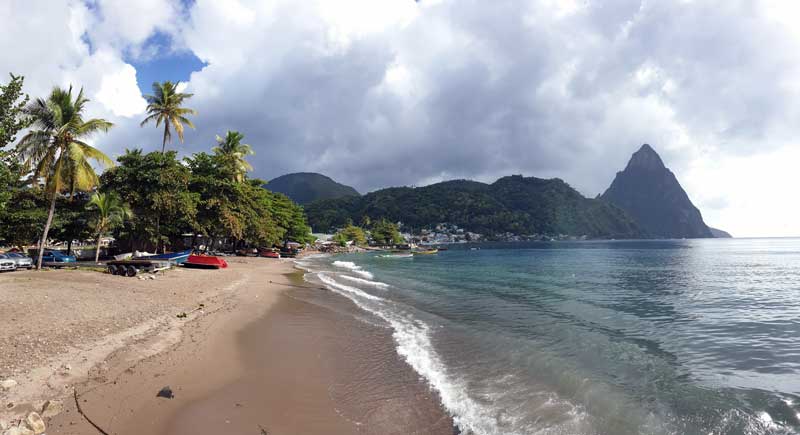
Nearby (southeast of the city) is another unique site:
La Soufriere
Its name is considered the only volcano in the world that you can reach inside with a car, so it is called a "Drive-in Volcano." It is a dormant volcano with a crater resembling the lunar surface, containing bubbling mud pools and vents from which sulfur steam jets erupt with a smell reminiscent of rotten eggs.
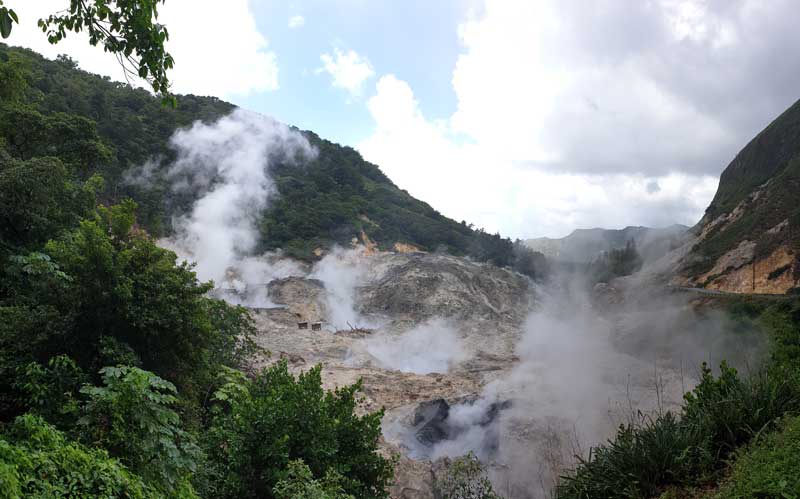
You will likely smell the sulfur even before you reach the site itself. You can walk between the sulfur jets and the steaming pools whose water color is green and yellow, marvel at the special sight, and "enjoy" the smell... Healing properties are attributed to the sulfur springs here, called Sulphur Springs. The modest entrance fee includes a personal local guide. The tour lasts about half an hour.
Diamond Botanical Gardens
These are impressive botanical gardens lush with exotic tropical vegetation, which deserve at least two hours for a visit.
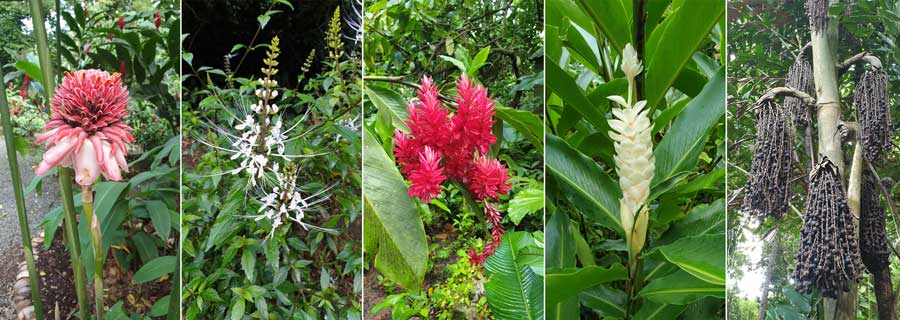
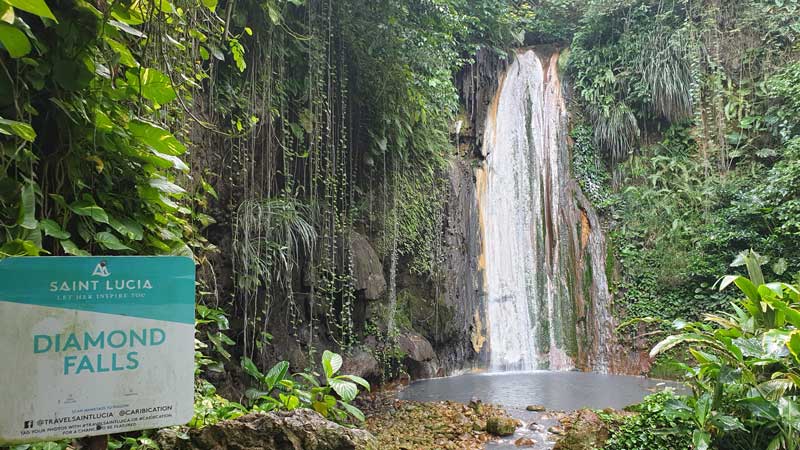
In addition to a large selection of fruit trees, some of which you have never seen before, the gardens have an interesting geological attraction: a waterfall called "Diamond Waterfall," created from water coming from the nearby sulfur springs. The color of the water in the waterfall changes several times a day from yellow to black to green and gray.
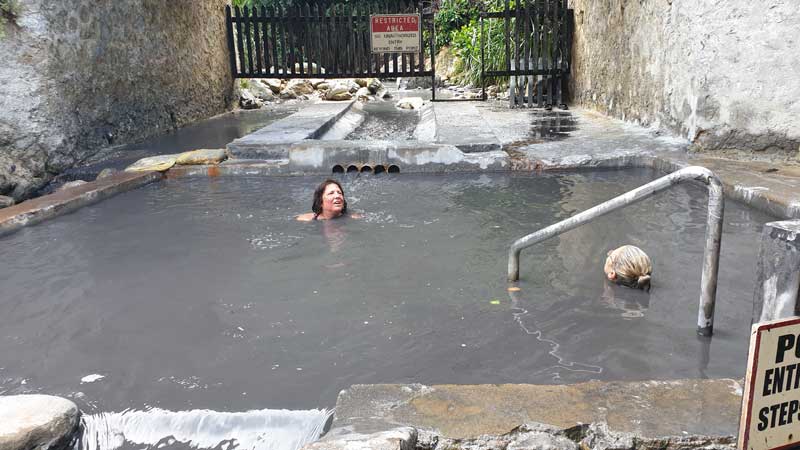
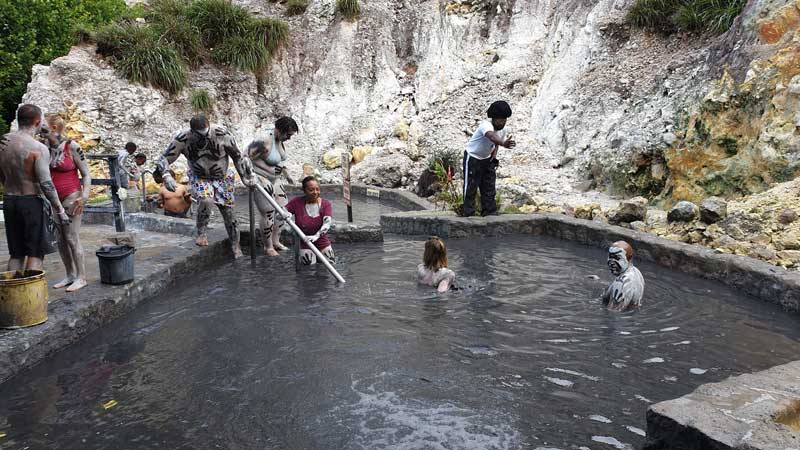
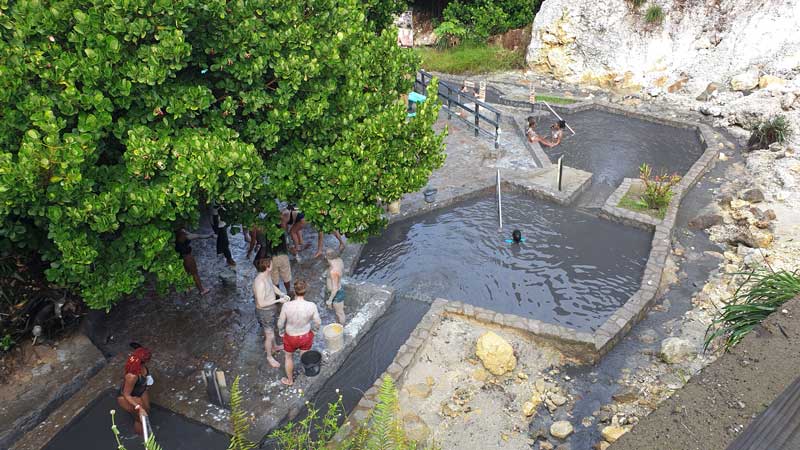
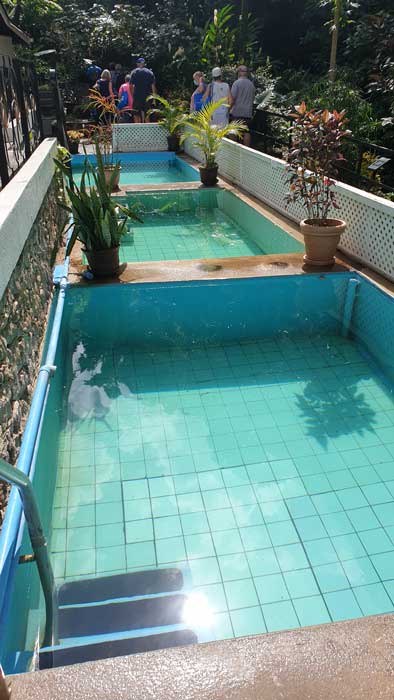
In the gardens are mineral water baths built by order of King Louis XVI for the French soldiers fighting in the area. The baths were renovated and restored and are active to this day. The water temperature in the pools is 41 degrees Celsius. For a modest sum, you can test the healing properties of the spring water yourself. Rumor has it that Josephine Bonaparte, Napoleon's wife, bathed in these healing springs during her visit to her father who stayed at the nearby estate.
In the vicinity of Soufriere, there are several farms and plantations that can be visited:
Morne Coubaril Estate
This was the first farm established on the island, back in 1713, and to this day, cocoa and coconuts are grown there. Tours are held on site, including demonstrations of cocoa and sugar processing as done in the past by manual labor before the invention of agricultural machinery. The hour-long tour also includes walking in the original streets used by mule-drawn wagons and a visit to a restored slave camp. There is also a small historical museum on site.
Fond Doux Holiday Plantation
Offers a similar tour of a 250-year-old farm located about 5 km from Soufriere.
Soufriere can be reached by a two-hour drive on winding roads or by an organized boat trip from Castries port along the west coast of the island to the city port, which usually also includes lunch on board the ship and a ride in minibuses to the botanical gardens and the volcanic crater.
South of Soufriere, in a crescent-shaped sandy bay halfway to the southernmost point of the island, lies a picturesque village called: Choiseul. This village is rich in history, artworks influenced by ancient Caribbean tradition, and above all, magnificent views. In the village, you can see ancient wall paintings (petroglyphs) of the first settlers on the island. The place is especially popular with art and folklore enthusiasts.
The City of Vieux Fort
Located at the southernmost point in St. Lucia. it was one of the first settlement points on the island, and today it houses the island's main airport and also a cargo port. The city has a recommended sandy beach, particularly favored by windsurfers. Near the city are two tiny islands called "Maria Islands," which are a nature reserve with rare birds and wildlife, some of which cannot be found anywhere else in the world. The islands are quite arid, and salt-laden winds almost always blow there. The reserve is closed during the nesting season but open to visitors from August to May. The reserve has a visitor center located in the city (on the main island, St. Lucia) open year-round, telling the story of the reserve and the first settlers in the area. The Saint Lucia National Trust organizes guided tours of the reserve, including a boat trip from Vieux Fort.
Beaches of St. Lucia
St. Lucia has a wide variety of beaches, ranging from long beaches with quiet turquoise waters and white sand, to beaches with brown sand, to beaches with black volcanic sand, hidden bays at the foot of steep hills, and wild stormy beaches on the east side of the island. All beaches suitable for swimming and water sports are on the west side of the island. The scenery on the eastern, Atlantic side of the island is beautiful and wild, but the beaches there are not intended for swimming because the water is too rough. Access to many beaches is also not convenient and suitable only for those with a 4X4 vehicle or experienced hikers.
All beaches in St. Lucia are public, meaning entrance to them is free for everyone, including the beaches adjacent to the most luxurious hotels. You will only be required to pay for the use of equipment on the beach, such as lounge chairs and umbrellas. Luxurious resorts have adjacent beaches with a variety of water sports options, including boat rentals, diving and snorkeling equipment, and surfing equipment. There are no lifeguards on the beaches, but if the sea is particularly rough, red flags fly at the more popular beaches.
The influence of the French language is evident in the names of the beaches, particularly in the southern part of the island; all beach names begin with the word "Anse," which means "Bay" in French. Most beaches can be reached by car, but for some, access is only by boat.
The best beaches on the island:
Beaches near the city of Soufriere:
Anse Chastanet Beach
It is a palm-lined beach with black sand located in front of a luxury hotel of the same name. The black sand provides a lovely contrast to the clear turquoise water and the green hills surrounding the beach. The beach has coral reefs and is considered one of the best places for diving and snorkeling on the island. The beach has a restaurant, bar, and diving equipment shop.
Anse des Pitons Beach is located south of Soufriere in front of the Jalousie Hilton Resort, exactly between the two "Piton" hills. It is a crescent-shaped beach with soft white sand brought to the site by the Hilton hotel and placed over the original natural black sand that was there. It is a recommended beach for diving, snorkeling, and swimming, but its main uniqueness is its stunning location at the foot of the towering green hills and the lovely view from it. The beach can be reached through the hotel or by boat from the sea.
Beaches in Marigot Bay:
Marigot Bay Beach is a postcard-perfect picturesque beach surrounded on three sides by steep, lush green hills and on the fourth side by the clear, calm waters of the Caribbean Sea. The beach is full of palm trees that add to its beauty. This secluded bay looks as if it were taken from the dreams of those imagining what a Caribbean beach should look like. Near the beach is a marina where many yachts anchor and several hidden hotels that blend well into the landscape. Near the beach, there are restaurants, and you can join organized diving trips.
Anse Cochon is a 5 km long beach of shiny black sand located south of Marigot Bay. It can be reached only by boat. It is an excellent beach for swimming, diving, and snorkeling (a shallow reef teeming with fish is near the beach), but it has no facilities or services. The beach is especially suitable for those looking for peace, tranquility, and privacy.
Beaches North of Castries:
Reduit Beach (pronounced: Red-Wee) is the most popular beach in St. Lucia, and many claim it is the best beach on the island. It is a long stretch of soft, beige-colored sand near Rodney Bay. The beach is located near a hotel in the town of Gros Islet, and you can find everything you need for a full day of recreation and vacation on the shore, from water sports of all kinds to many restaurants and bars. In peak tourist season (December-April), the beach can be quite crowded.
Choc Beach is located south of Rodney Bay, and access to it from Castries is very convenient. The beach is known for its calm waters, so it is especially popular with families. Nearby are plenty of restaurants and stalls for renting boats and surfboards.
Vigie Beach is the closest beach to the capital, Castries. It is a beach with soft beige-white sand and crystal clear water, stretching for 3 km parallel to the Castries airport.
Pigeon Point Beach is part of the Pigeon Island National Historic Park located at the northwestern tip of St. Lucia. It is a small, quiet beach with white sand and excellent picnic facilities.
Sports and Active Leisure
St. Lucia offers a wealth of water sports activities including sailing, surfing, fishing, water skiing, paragliding, and diving. Reduit Beach offers the largest selection of water sports, but professional windsurfers will prefer the beach at the southern tip of the island at Vieux Fort.
The comfortable weather most of the year allows for sporting activities on land under optimal conditions. Common activities on the island include: tennis, golf, horseback riding, jogging, rainforest hiking, and mountain climbing.
Shopping
Most shops and galleries on the island are concentrated in the capital area, Castries. It is recommended to buy interesting fruits and vegetables as well as local handicrafts at the Castries Central Market. At Pointe Seraphine dock, used by large cruise ships, you will find the largest and most impressive selection of shops on the island. In order to purchase duty-free products, you must show your cruise boarding passes. Another shopping center specializing in duty-free products is La Place Carenage in the city center.
The most popular products to buy among St. Lucia tourists are porcelain, crystals, and jewelry.